“No building is truly green,” says Dr. Shraddha Mahore Manjrekar. From Green Certifications that are more branding than practice to the vulnerability of cities to environmental crises, she elucidates the existing gaps and suggests a way forward for the Green Building Industry towards sustainability — and what we must rethink before it’s too late.
‘Framework for Built Environment for Sustainable Rural Development through Education and Awareness’
“I see myself as a continuous learner shaped by teaching, research and practice,” elucidates Dr. Shraddha Mahore Manjrekar!
True to be a learner for life, Dr. Shraddha Mahore Manjrekar epitomes academic excellence and her Doctoral thesis ‘Framework for Built Environment for Sustainable Rural Development through Education and Awareness’ is making inroads for “Sustainable Rural Development” in India.
Having completed her Diploma in Civil Engineering from Shri Vaishnav Polytechnic, Indore, in 1998, Shraddha Mahore Manjrekar pursued architecture at IEPT – Institute of Environmental Planning and Technology, Indore. After graduating in 1998, Shraddha Mahore Manjrekar made her big leap to enroll at IIT Roorkee to complete her Master of Urban and rural Planning (2004 – 2006).
After her Masters, Shraddha Mahore Manjrekar joined TERI – The Energy and Research Institute, New Delhi in 2006 as Research Associate. From 2006 to 2009, she led multiple projects as Project Leader for Green Building and Consultancy projects. She led Ecofirst Services Limited – a TATA Enterprise as Architecture Manager from 2011 to 2014. All along her career, Shraddha Mahore Manjrekar realized she was missing something significant that is much bigger than being a green building consultant.
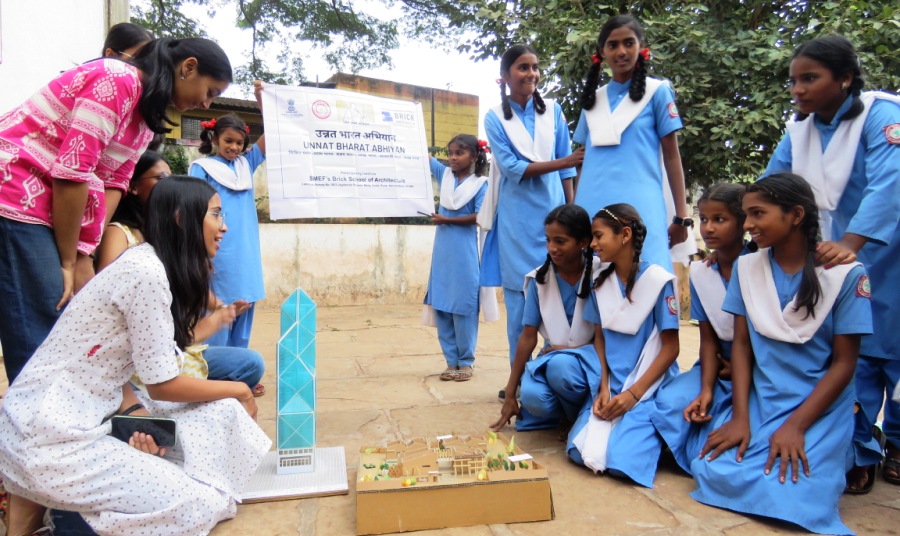
Awareness-drive – Linking Architecture Education with Rural Areas
In June 2015, Shraddha Mahore Manjrekar joined, as Associate Professor, the SMEF’s Brick Group of Institutes, Pune, India. She started grooming the younger generation with her expertise and knowledge towards better future. It has been more than a decade to be part of the Academic Coordination Committee, Research and Travel Grant Coordinator, teaching Urban Studies, Research, Building Services, Surveying and Levelling and guiding Students’ Theses at the Institute. Shraddha Mahore Manjrekar has remained a key person to lead the NAAC process. She even helped the institute to secure NAAC accreditation.
In the year 2020, she pursued her Doctoral quest at Amity University, Gurgaon. Five years later in 2025, she transformed to be known as Dr. Shraddha Mahore Manjrekar after completing her Ph. D in Architecture and Planning. Her jubilant academic journey for greater goodness of the fellow citizens has opened multiple doors for Dr. Shraddha Mahore Manjrekar.
Dr. Shraddha Mahore Manjrekar’s significant contributions are noteworthy in the field of policymaking, prominent among them:
- Policy Frameworks: Drafted Environmental Norms for Large Construction Sites (MoEF), Home Owners’ Energy Brochure (MNRE) and Eco-Housing Training Module (IIEC);
- Grant Recipient: ICSSR-WRC 2022; Unnat Bharat Abhiyan 2023 (Special Expert Group);
- Copyrighted Research: Framework for Assessment of Built Environment for Sustainable Development of Rural Areas and Defining Rural Typologies for India.
Dr. Shraddha Mahore Manjrekar is a published author in her mother tongue Marathi and English. She has also contributed significantly as author and co-author in multiple research publications with her expertise and knowledge. Her humility and professional approach are truly infectious in nature. Meticulous towards her academic and professionalism, Dr. Shraddha Mahore Manjrekar is loved by all her students. She holds high respect among the younger generation and fellow peers at the Institute. She strongly believes that education is a means of nation-building, combining contextual design, inclusive practices and community engagement.
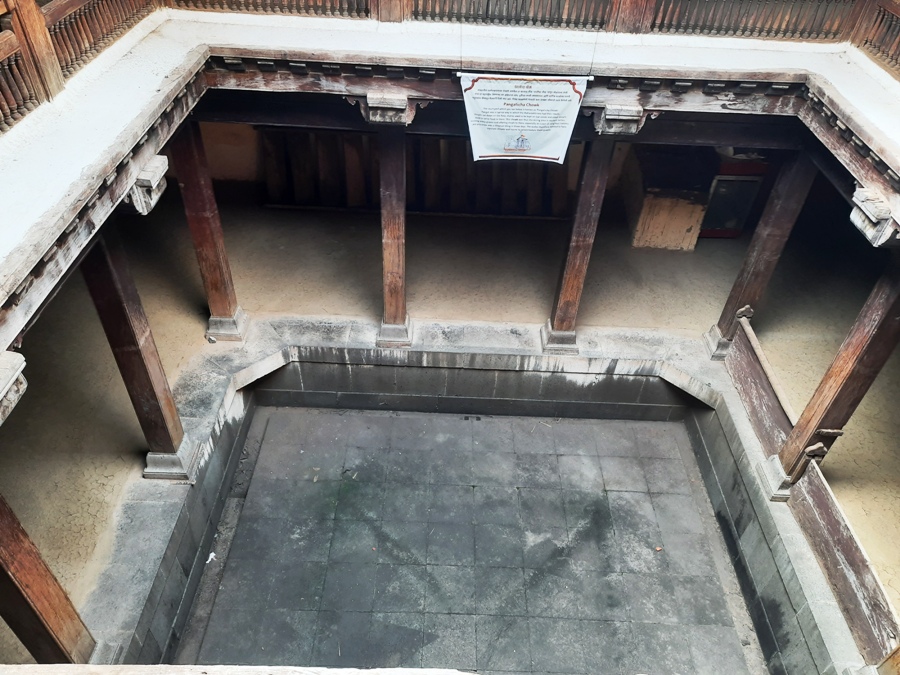
Courtyard House of Melavani
Johnny D has an insightful and a great learning experience interacting with Dr. Shraddha Mahore Manjrekar.
What was your childhood’s ambition? Have you always wanted to be an urban and rural planner – architect – civil engineer?
My childhood ambition was not clearly articulated (smiles). I have been always an attentive observer of my surroundings. Travelling between Indore and our ancestral village in Vidarbha introduced me to the sharp contrasts between urban and rural India. I was drawn to well-planned buildings and settlements, while being equally concerned by unplanned growth and spatial neglect.
While career choices were limited in my awareness during my formative years, our upbringing emphasized creativity, social responsibility and nation-building. These values gradually guided me towards architecture and urban–rural planning, disciplines that allow design to engage meaningfully with society and the environment.
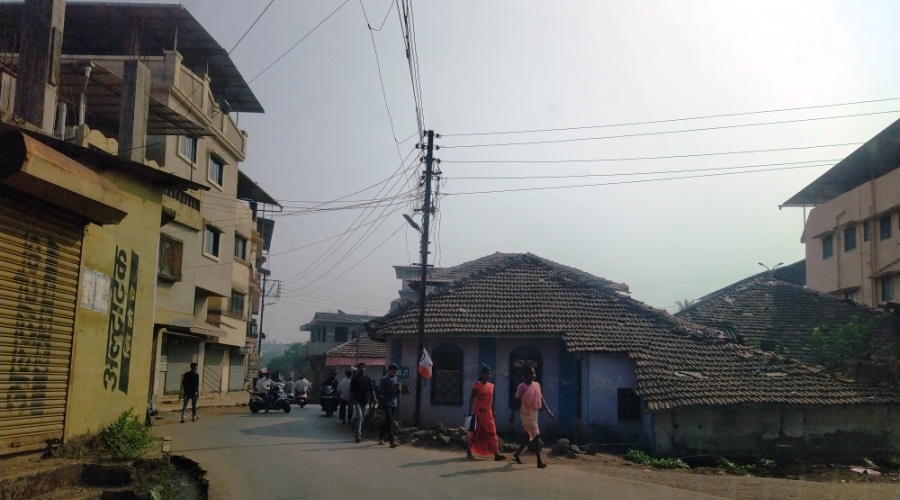
A Transformed Village
You have an impressive repertoire with a Ph. D in Planning from Amity School of Architecture and Planning, Gurugram(2020 – 2025); Master of Urban and Rural Planning from IIT Roorkee (2004 – 2006); Bachelor of Architecture, IEPT, Indore (1998 – 2003); and Diploma in Civil Engineering, Shri Vaishnav Polytechnic, Indore (1995 – 1998). Briefly elucidate your academic quest.
My academic journey reflects a gradual expansion of perspective, moving from technical understanding to contextual and systemic thinking. I began with a Diploma in Civil Engineering, which grounded me in construction processes and material systems. Architecture followed naturally, allowing me to integrate creativity with technical rigor and contextual sensitivity.
Architectural education and extensive study tours across India broadened my understanding beyond individual buildings to larger urban, rural and environmental systems. This led me to pursue a Master’s in Urban and Rural Planning at IIT Roorkee, where I re-engaged deeply with the disparities I had observed since childhood.
Professionally, my involvement in JNNURM projects in Indore, followed by research and practice roles at TERI and Ecofirst, gave me exposure to sustainability policy, green building facilitation, and real-estate dynamics. These experiences clarified a critical insight: long-term sustainability must be embedded through education. This conviction ultimately led me to academia and Doctoral Research, enabling me to integrate practice, research and teaching into a cohesive professional path.
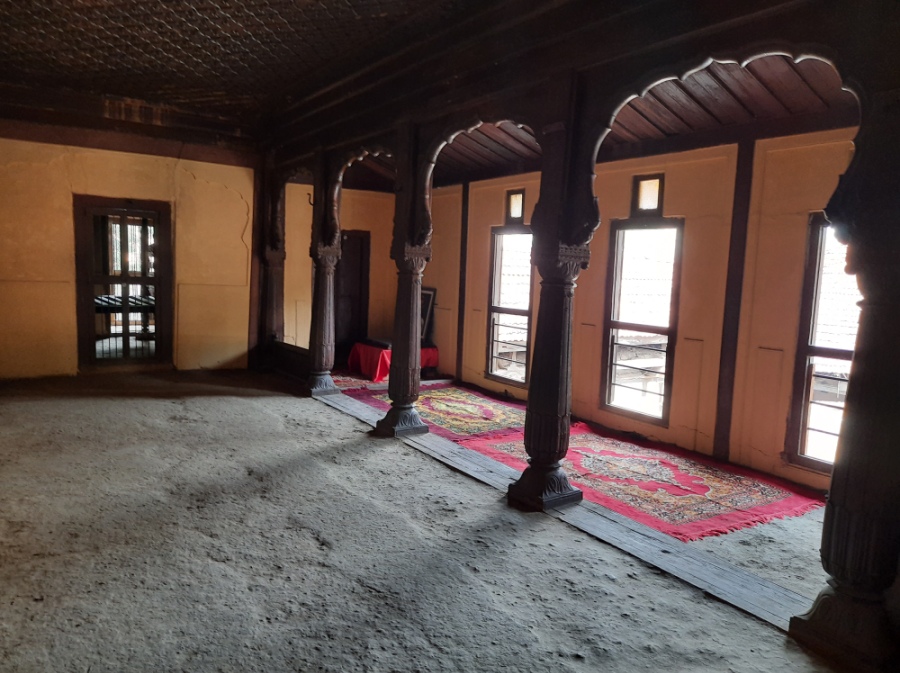
Nana Phadnavis Wada in Menavli, Maharashtra, India – Rural Heritage & Sustainable Building Design
Elucidate briefly your Doctoral thesis – ‘Framework for Built Environment for Sustainable Rural Development through Education and Awareness’.
My doctoral research positions the built environment as both a reflection and a driver of development. It identifies a critical gap wherein rural communities, despite possessing ingrained sustainable construction knowledge, are increasingly aspiring toward urban lifestyles. This shift has resulted in rapid and often unsustainable transformations of rural landscapes.
India, with over 66% of its population and geographical area in rural regions, holds immense potential for development rooted in traditional practices, cultural values, and natural resources. Development, however, does not imply transforming villages into cities at the cost of indigenous identity and ecological balance. Meaningful architecture is that which is functional, timeless, and deeply embedded in the socio-cultural and occupational routines of its users, enabling continuity across generations and forming a strong foundation for sustainability.
While several village development initiatives were documented as success stories, many were found to inadequately address environmental sensitivity, long-term resource sustainability, and cultural implications of the emerging built environment. Rapid infrastructure upgrades and the introduction of urban amenities often proceeded without an integrated approach, highlighting the need for development frameworks that respect natural systems, social structures and heritage.
A key concern that emerged was the gradual erosion of traditional livelihoods, social spaces, and environmental balance due to standardized development model and limited awareness among stakeholders. The research therefore emphasized the need to align rural development practices with India’s sustainable architectural legacy, while supporting traditional occupations and achieving holistic sustainability—social, economic, cultural and environmental.
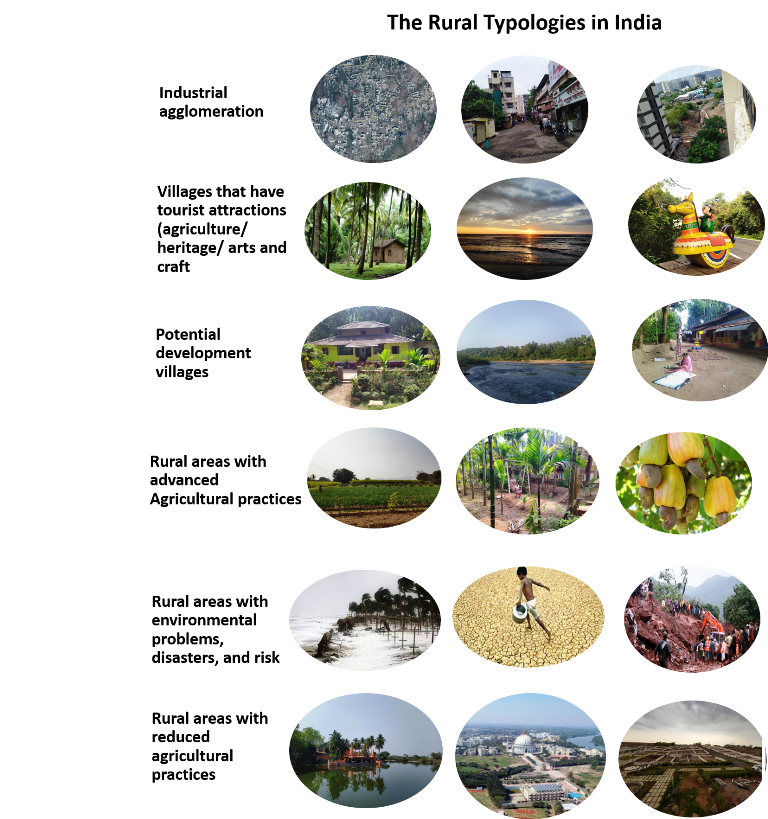
Rural Typologies
The study proposed a framework of built environment for sustainable rural development. The later part of study linked it with education and awareness, with a specific focus on architectural academia. The first part developed sustainability parameters drawing from architectural philosophy, building science and traditional practices. A scientifically designed assessment tool based on the AHP – Analytical Hierarchy Process evaluated sustainability across six rural typologies using seven criteria and fifteen sub-criteria, with Maharashtra selected as a representative study area. Field investigations and comparative analyses revealed significant gaps in awareness despite the presence of inherently sustainable practices.
The second part explored the role of architectural education through bibliometric analysis, alignment with SDGs, G20 goals and national policies, and a Delphi-based survey of architectural institutions across India. The findings indicated growing willingness within academia, but limited implementation due to curricular rigidity, inconsistent faculty support and inadequate institutional mechanisms. The study concluded that architectural academia has strong potential to foster awareness, strengthen interdisciplinary education and support sustainable rural development. This research opens up the thread of exploring the methods for utilization of the strong potential of academia.
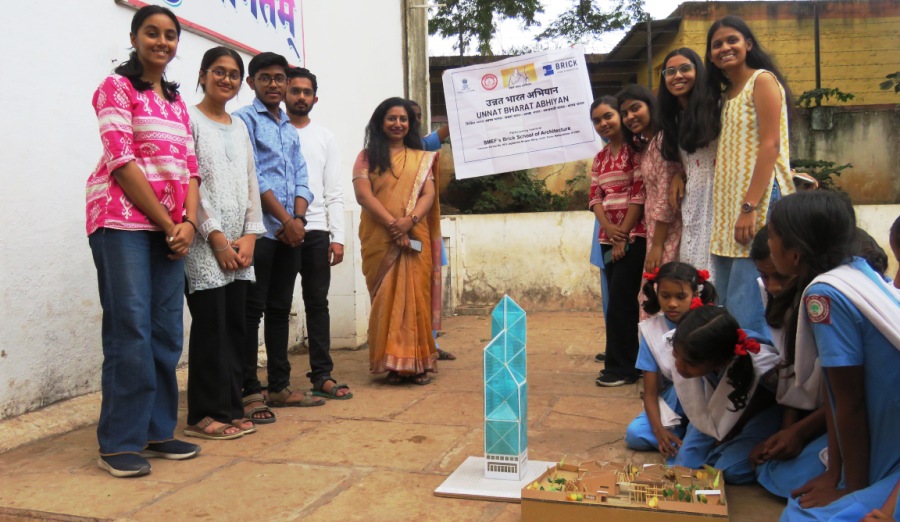
Generating Awareness about Sustainable Construction
What are the aims and objectives of your Doctoral Thesis?
The aim of my Doctoral Research was to develop a framework of rural built environment that is conducive for sustainable development. The study focused on identifying key built-environment parameters, assessing the existing level of awareness and participation in villages, examining gaps in policies and local practices, and exploring the role of architectural education in strengthening sustainable rural development.
Please elaborate to elucidate – ‘The United Nations Brundtland Commission defined “Sustainability” as “meeting the needs of the present without compromising the ability of future generations to meet their own needs’.
Sustainability fundamentally concerns responsibility across generations. Every resource we use, modify, or exhaust today directly shapes the opportunities available to those who follow. We are at a critical juncture where growth must be balanced with ecological integrity, social equity and economic resilience.
Sustainability is not limited to conservation alone; it involves designing systems, buildings, and lifestyles that respect limits while enabling dignity and well-being. In planning and construction, this means making decisions today that ensure future generations inherit environments that are liveable, resilient and culturally meaningful.
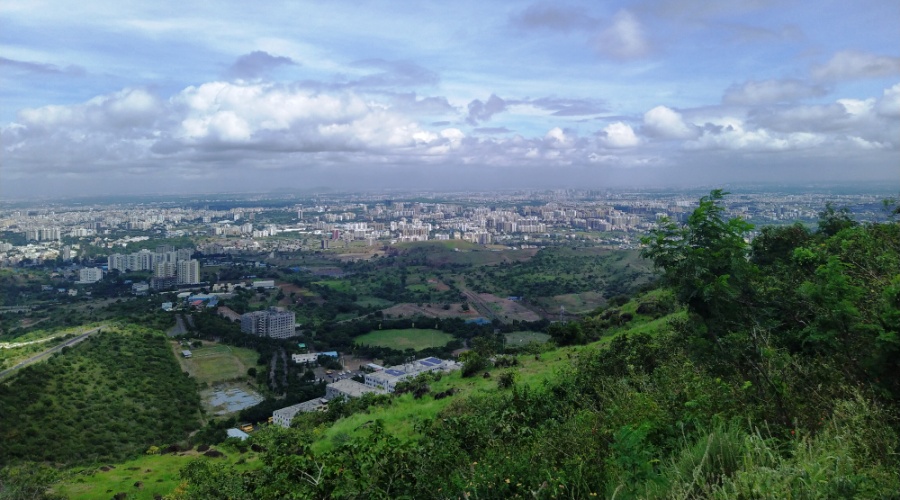
Ever-expanding Cities Landscape viewed from a Hill Top
Elucidate – ‘“Green Building Footprint” this term is used for all new construction projects. If we build something on surface of the earth, every square inch of it is affects earth in terms of disturbance of ecology, hydro-geological pattern, and also excessive extraction of natural resources, that are used in making the building construction industry’.
Technically, no building footprint can truly be green. Any construction impacts the earth – disturbing ecology, altering hydro-geological patterns, and consuming large amounts of natural resources. This calls for a shift in thinking and terminology to guide sustainable practices.
For example, instead of building on green-field sites with virgin materials, we should focus on retrofitting existing buildings to make them climate-responsive, constructing on brown-field sites, and using upcycled materials. Attention must also be given to rejuvenating blocked underground water channels and natural flows disrupted by construction. I propose new terminologies like “rejuvenation of natural footprint,” “rejuvenation of wells,” and “footprint of upgradation of dilapidated structures” or “Saving of Green Footprint” to better reflect practices that truly support sustainability.
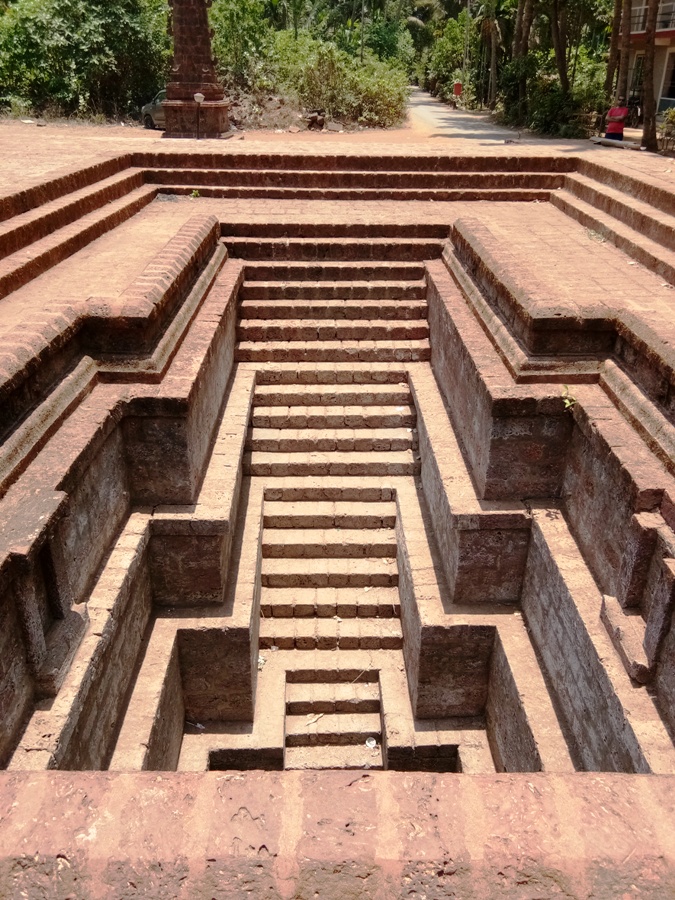
Epitome of Sustainability – A Stepwell in Diveagar, Maharashtra
‘The business of sustainable buildings was very well penetrated in the economy. However, its understanding and practices did not’. Elucidate your perspective briefly.
The built environment is both a product and a measure of sustainability, reflecting how human activities balance environmental, social and economic priorities. While green rating systems have introduced valuable evaluation frameworks, the scope of sustainable design extends far beyond certification checklists. Long-term sustainability depends not only on environmental performance, but also on socio-cultural relevance, economic viability, and the preservation of local identity – dimensions that remain insufficiently addressed in many contemporary rating systems.
Buildings that are functionally adaptable, structurally robust, and culturally resonant tend to endure over generations, requiring fewer alterations in response to changing market trends. Such longevity itself is a powerful form of sustainability, as prolonged use reduces material consumption, waste generation, and environmental impact.
Although the sustainable building sector has expanded rapidly as a market, its core principles are often diluted. Many projects emphasize products, technologies and certifications, while fundamental aspects of building science and integrated design receive limited attention. For example, fully glazed buildings may achieve green ratings through high-performance materials, despite the high embodied energy of such systems and their long-term operational inefficiencies.
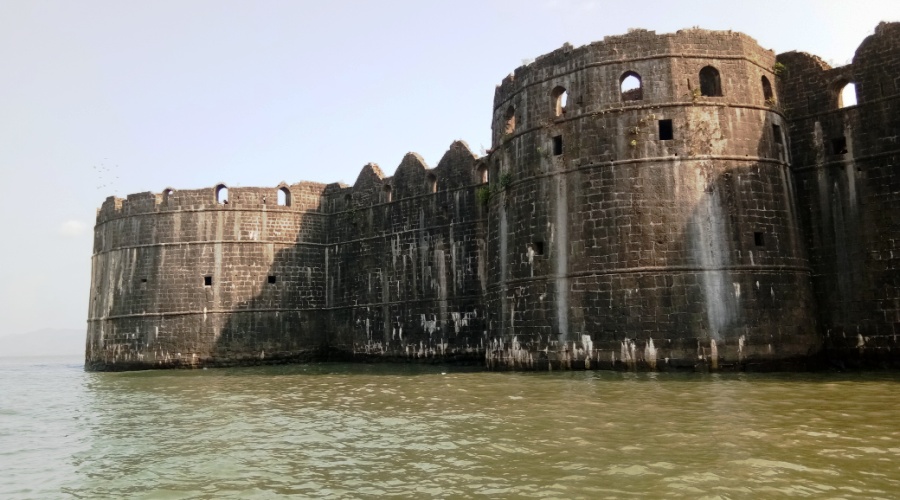
Undefeated Marine Murud Janjeera Fort – Heritage of Maharashtra
Sustainability begins with the intent of a project and must be embedded through holistic design – site selection, orientation, spatial planning and material choice – rather than isolated technological interventions.
In practice, systems such as solar water heaters, waste composting units, or renewable energy installations are frequently implemented for regulatory compliance rather than long-term performance, leading to redundancy over time – when sustainability consultants are engaged late in the process, the focus shifts from integrated design to documentation.
As a result, the term “Green” risks becoming a branding exercise rather than a meaningful measure of environmental responsibility. True sustainability must therefore be embedded at the inception of the design process, guiding decisions from concept to lifecycle performance.

Sawantwadi Wooden Toy Craft
Education leads to awareness about ‘Sustainable Built Environment’. In a world, where the ‘Education System is facing numerous challenges’ – how would you generate awareness about “Sustainability”?
Education remains the most powerful tool for building sustainability awareness, provided it extends beyond formal curricula. In my teaching, sustainability is embedded as a prerequisite rather than an add-on. Beyond academia, my engagement through initiatives such as Unnat Bharat Abhiyan and authorship in regional languages aims to translate technical knowledge into accessible public understanding. Awareness generation must be continuous, contextual and inclusive.
Though the later part of my thesis dived into architectural academia, but it is not the sole sector of raising awareness. Sustainability must engage all stakeholders – architects, clients, developers, policymakers and communities.
A meaningful shift will occur when users themselves demand thermally comfortable, resource-efficient and culturally rooted buildings. Government policies and development decisions must also reflect environmental responsibility. In architectural education, sustainability should not only remain confined to isolated subjects, but also should be integrated across design, technology and planning studios.
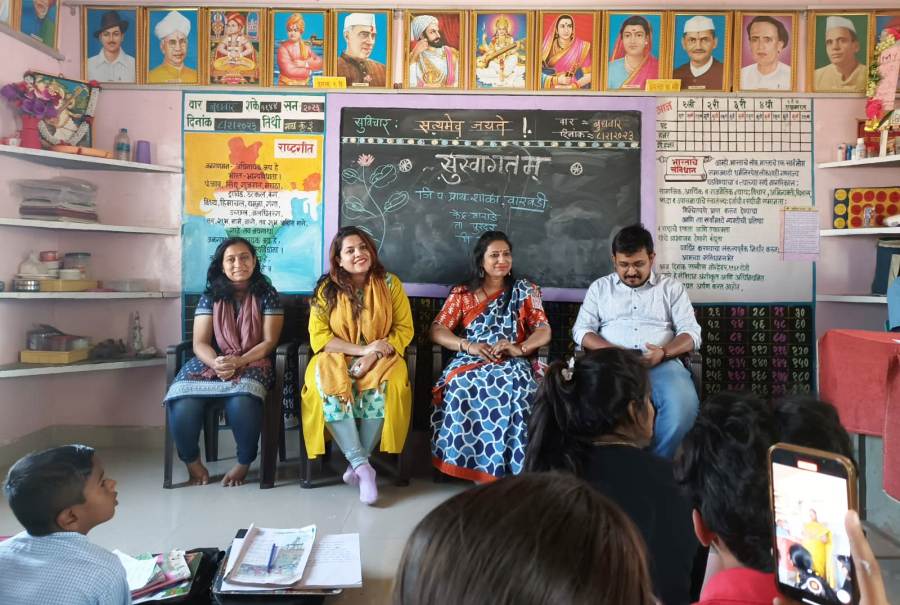
Village Visit- Unnat Bharat Abhiyaan
‘The Indus Valley Civilization c. 2600 BCE and 1900 BCE is still renowned for its highly advanced urban planning. The “Drainage System” was way ahead of its time!’ In our Modern-Day Civilization, ‘Cities are designed for destruction’ with no serious thoughts or policymaking importance given to ‘Effective Drainage & Sewage Systems’. Why have we failed so miserably, in spite of having the most advanced and innovative technology today, to safeguard cities from repeated flooding?
Indian civilization offers enduring examples of water-sensitive planning embedded within the built environment – river ghats, temple ponds, stepwells, reservoirs, and traditional drainage systems such as nullahs in Uttarakhand. These structures reflected a deep understanding of hydrology, climate and settlement planning, supported by evolving indigenous technologies.
However, rapid urban expansion has gradually disrupted these systems. Ever-expanding built footprints have encroached upon floodplains, streams and natural drainage channels, often leading to their fragmentation or complete loss. As a result, many traditional water structures that once regulated flow, storage and recharge are either neglected or erased from contemporary planning frameworks.
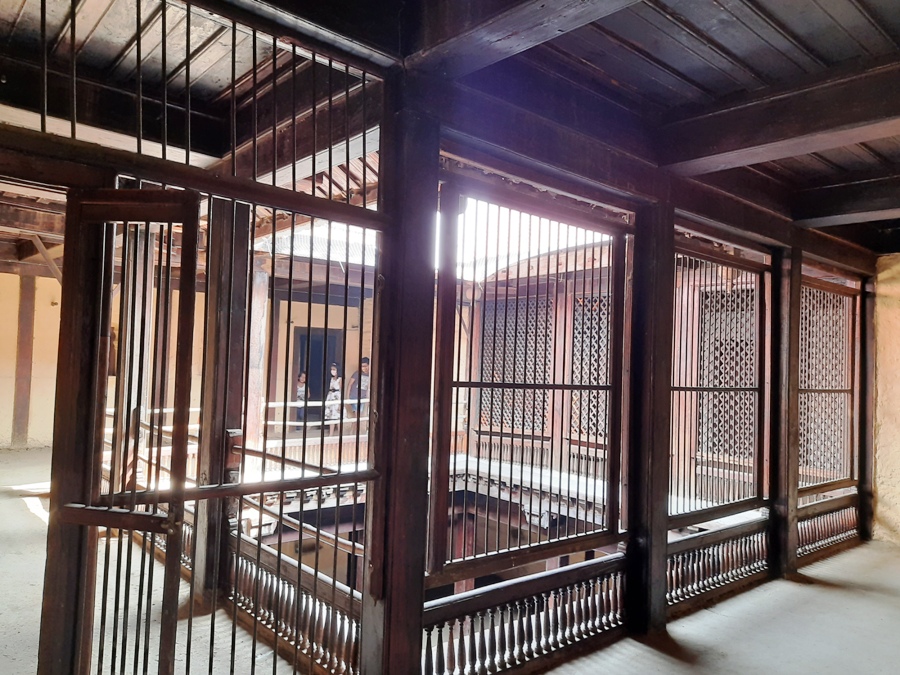
Internal Airy Courtyard in Melavani Wada
The challenge today lies not only in the absence of technology, but also in fragmented governance and compartmentalized planning practices. Urban infrastructure – roads, drainage, sewage and utilities – is frequently designed and implemented in isolation, with limited consideration of natural systems or long-term environmental performance.
Excessive concretization further reduces ground permeability, thereby increasing surface runoff while restricting groundwater recharge. This has produced a recurring paradox: cities that experience severe flooding during monsoons simultaneously face water scarcity in dry seasons. While ancient settlements worked in harmony with natural systems out of necessity, modern cities often disregard them despite access to advanced knowledge and tools.
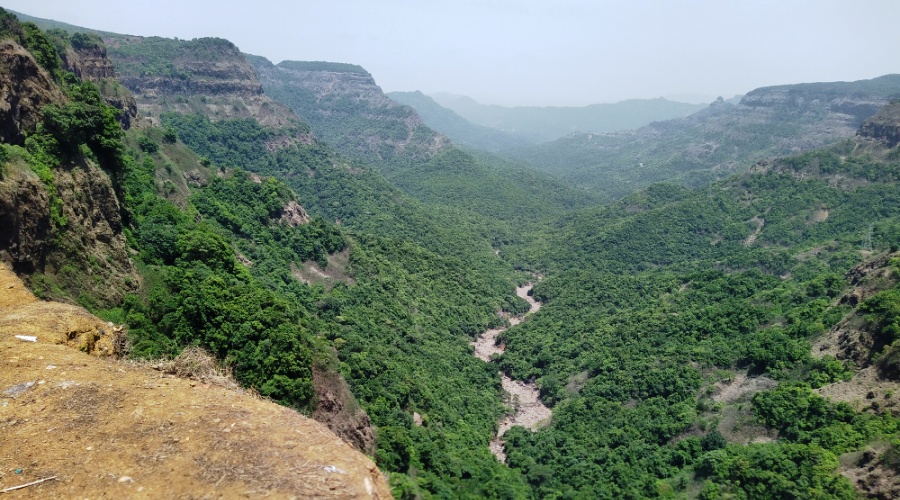
Rich biodiversity of Western Ghats
‘The integration of sustainability and rural development into architectural education reflects progress and ongoing challenges. What are the major challenges that need to be tackled at grassroots and policymaking level?
One of the major challenges lies in the way contemporary architectural education defines progress, development and advancement. The current emphasis on high-rise typologies, advanced technologies, and emerging tools such as AI often projects a narrow and misleading image of development. Energy-intensive buildings and visually striking forms are frequently equated with advancement, while context-sensitive, resource-efficient, and rural-focused approaches remain marginal.
At the grassroots level, this weakens engagement with real environmental and social challenges, particularly those of rural regions. At the policymaking level, a generalized curricula and centralized decision-making limit flexibility and responsiveness to local contexts. Sustainability and rural development therefore remain peripheral rather than foundational. A decisive shift is required to embed developmental education, environmental responsibility, contextual understanding and social relevance at the core of architectural education.
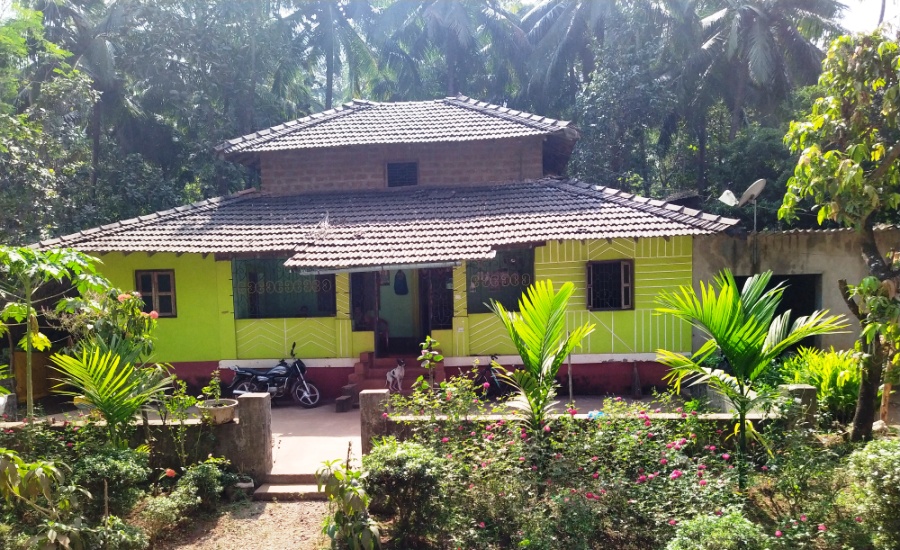
A Typical Konkan House
Which significant aspects of the global platform ‘zerobeyond – the new frontier!’ did you liked the most, and why?
‘zerobeyond– the new frontier!’ provides a valuable global platform for research-driven discourse on the built environment. While architectural projects often find visibility, scholarly inquiry and research-based work receive far fewer opportunities for recognition. The global platform meaningfully bridges this gap by foregrounding knowledge creation, critical thinking and research-led conversations.
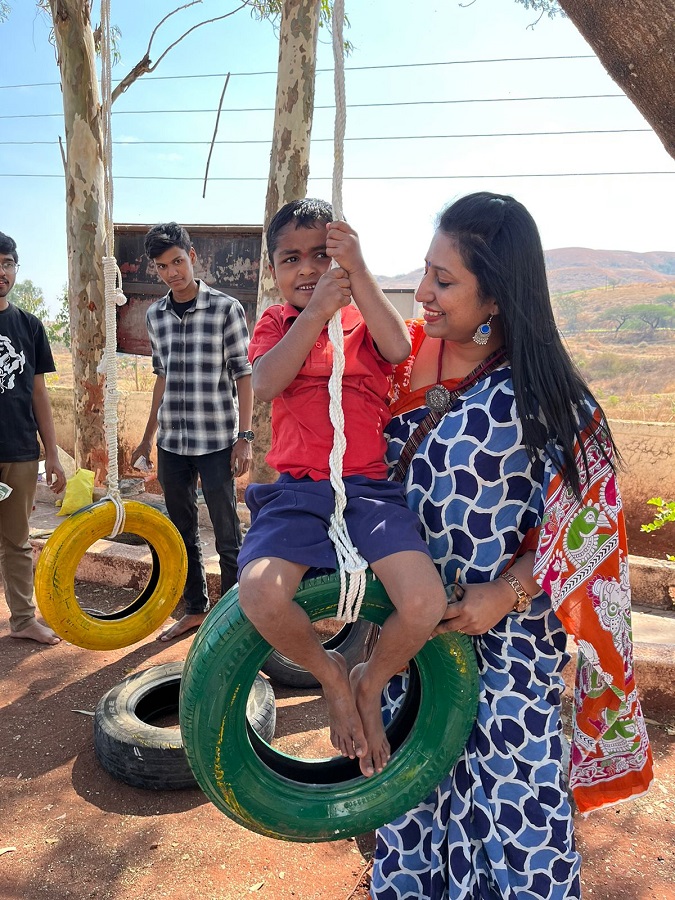
Dr. Shraddha Mahore Manjrekar in Playful Mood – Work done for Village School Children
How would you describe Dr. Shraddha Mahore Manjrekar as a professional and a person?
I see myself as a continuous learner shaped by teaching, research and practice.
In teaching, I focus on cultivating critical thinking, contextual sensitivity and ethical responsibility.
Beyond academia, I engage in initiatives that translate knowledge into accessible forms.
As a person, I value patience, collaboration and long-term thinking. I prioritize work that is meaningful rather than immediate visibility.
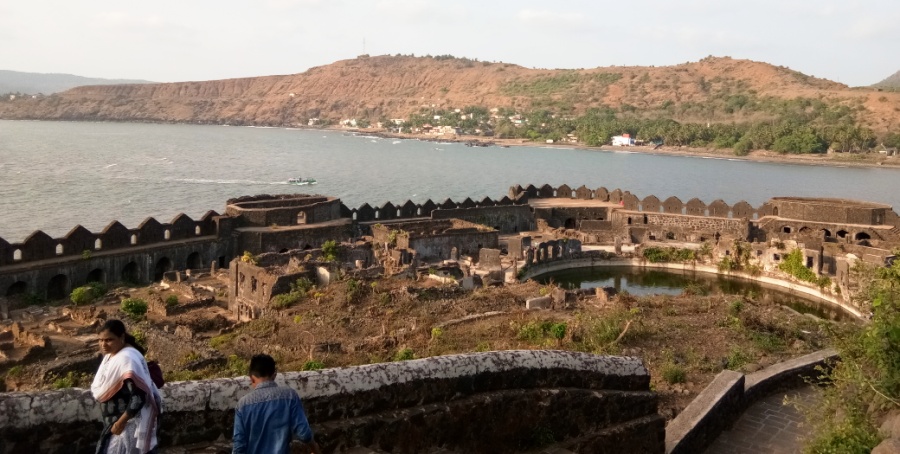
Landscape View from Janjeera Fort
Awards and honors, related to architecture / urban planning.
2022 – Special mention in Ultratech India Next – Build with Speed, Rural Housing Design Competition;
2021 – MASA (Maharashtra Association of Schools of Architecture) Best Teachers Award;
2020 – ‘Best Paper Presentation Award’ in Relating Education to Profession: A Pedagogical Approach, at Symbiosis Skills University;
2015 – Outstanding Contribution at Lunkad Realty, Pune.
Copyrights received:
2024: Rural Typologies in India;
2024: Framework for Built environment for Sustainable Development of Rural areas.
Image Courtesy: Dr. Shraddha Mahore Manjrekar