
People ‘Vote’ with their feet! The migration itself tells us something very significant and important. It reveals a gap between ‘nostalgia’ and ‘lived reality’ – The BIG QUESTION is: Why we need to stop romanticising Downtown Srinagar?
It is very important to understand the difference between the ‘Heritage Value’ and the ‘Functional Value’. There was a time when the “Downtown” was not just another neighbourhood of Srinagar. It was Srinagar!
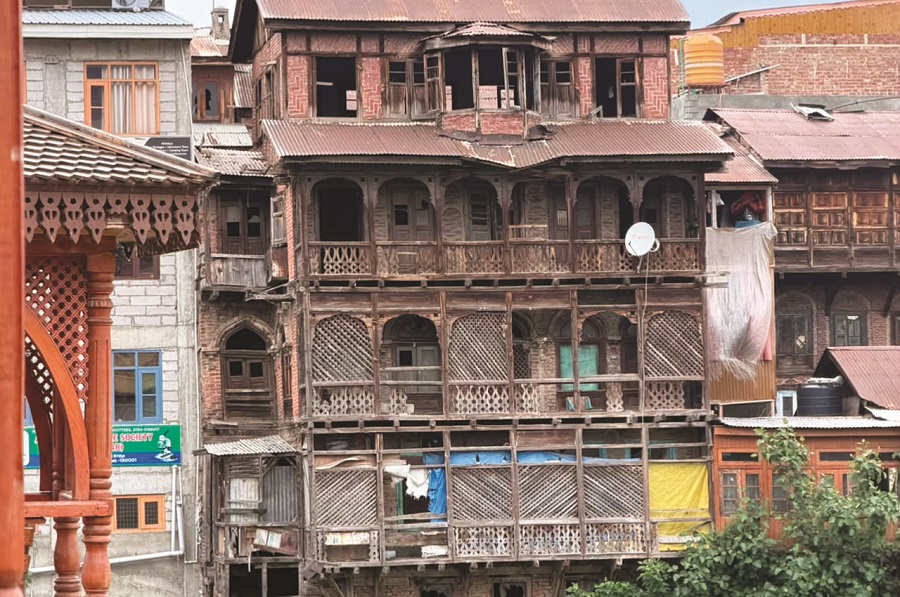
Traditional Timber Architecture Amidst Unsympathetic Modern Construction – Photographer: Pallavi Gupta
The city’s economy, trade routes, social life, and transportation systems revolved around it. The river connected communities. Water transport was central to daily life. The narrow lanes, dense urban fabric, and the traditional houses made perfect sense for the ways people used to live at those times. But cities evolve. The lifestyle we have today is fundamentally different from the lifestyle “Downtown” was designed for.
We have moved away from a water-based city to a road-based city. We travel by car, not by boat. We expect accessibility, parking, emergency vehicle access, wider roads, modern infrastructure and convenience. Yet, many of the lanes and neighbourhoods that people endlessly romanticize were never designed to accommodate these so-called “Modern Urban Realities”.
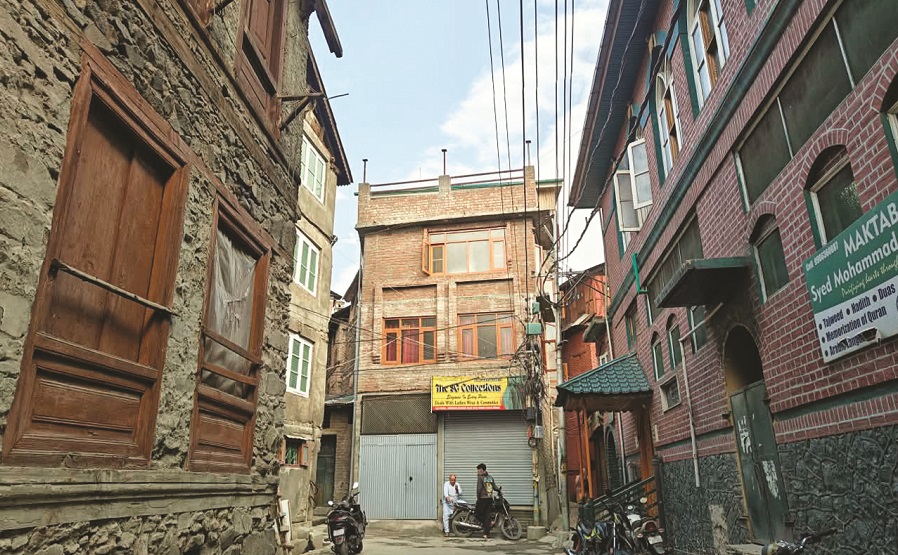
Traditional Residential Alleyways Beside Neighbourhood Religious Architecture – Photographer: Huzaif Mushtaq
Today, even the roads that were technically meant for vehicles often struggle when two cars attempt to pass each other. Congestion becomes inevitable. Accessibility becomes a challenge.
In many parts of the “Downtown”, firefighters struggle to access the inner neighbourhoods, and with modern electrical loads placed on an urban fabric that was never designed for them, a fire in one house can quickly spread through the entire clusters of tightly packed buildings, often consuming dozens of homes due to the absence of adequate fire breaks and access roads. What once functioned efficiently within “the” one urban system, now struggles within another that is more precarious.
And yet, we continue to glorify it!
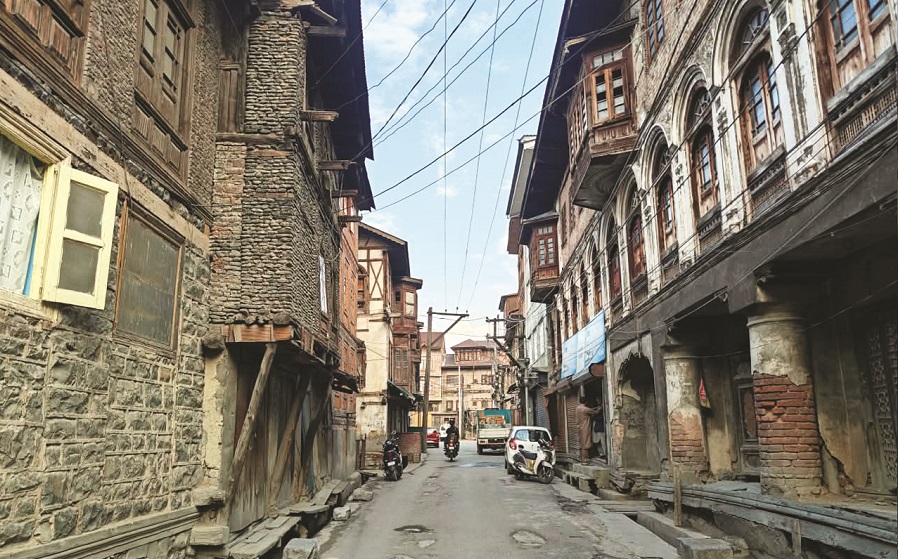
Historic Timber Architecture and Urban Functional Obsolescence – Photographer: Huzaif Mushtaq
What fascinates me the most is how this glorification spreads! Every few weeks, someone posts a beautiful photograph of “Downtown Srinagar” – A carved window! An old wooden balcony! A narrow lane bathed in afternoon light! A glimpse of the river!
The image circulates online, people share it, and suddenly the conversation turns into another round of collective nostalgia. The “Downtown” is called “the Soul of Srinagar”.
The Real SRINAGAR – The Place we have supposedly Abandoned!
Social media has confused aesthetics with value. Something can be visually beautiful and still be functionally obsolete. Something can make a great photograph and a difficult place to live in. On the other hand, as an architect and as someone who loves old places, I understand the appeal. But I think Kashmiris need to stop romanticising the “Downtown” and start evaluating it more honestly.
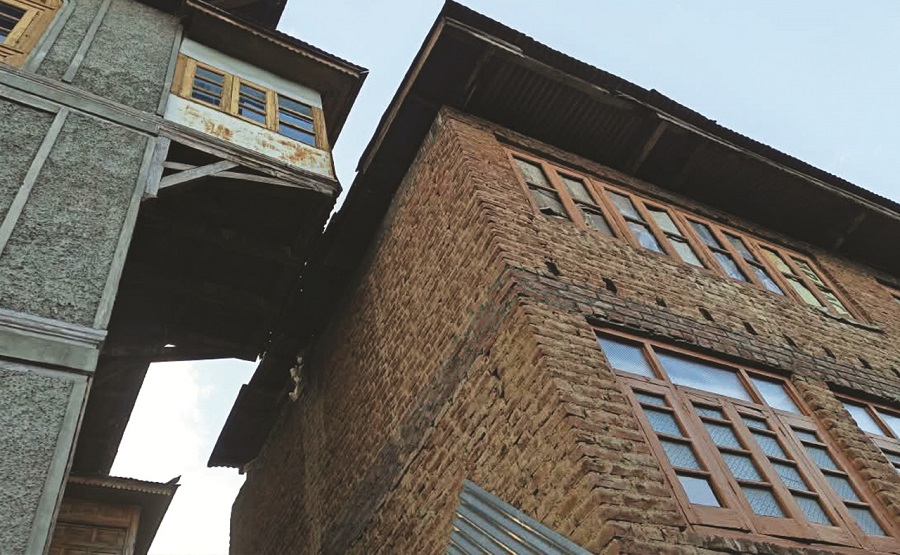
Traditional Timber Structures Adjoining Contemporary Building Extensions – Photographer: Huzaif Mushtaq
The real problem begins when we stop asking questions and start repeating opinions. What often passes for cultural appreciation is sometimes little more than aesthetic consumption. There is another contradiction that rarely ever gets discussed.
The same people who dream of contemporary homes with abundant natural light, open layouts, minimalist interiors, modern kitchens, larger rooms, and contemporary amenities are often the first to romanticize traditional urban housing that was designed around entirely different “social and environmental conditions”.
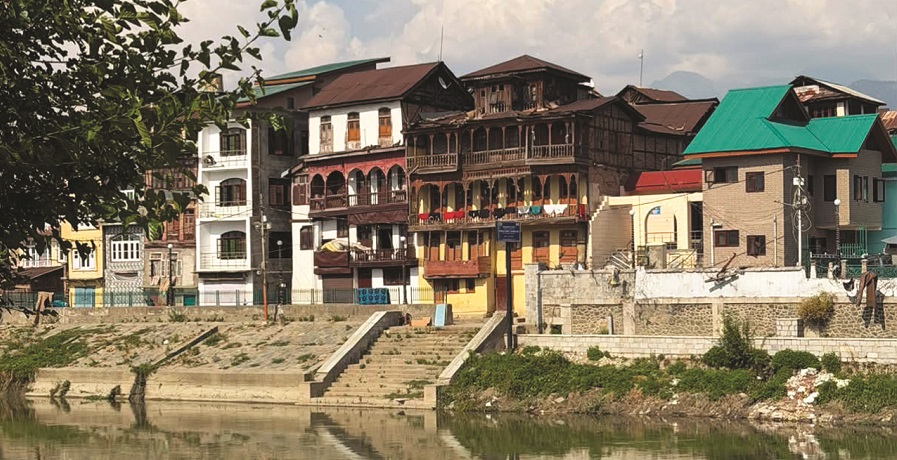
Historic Riverbank Settlements and Traditional Urban Fabric – Photographer: Pallavi Gupta
The truth is that most people admire these very spaces as images, not as places they would choose to inhabit anymore. And that leads to the multiple uncomfortable questions:
If Downtown represents the ideal way of living, why are so many people leaving it?
Why are families moving to newer neighbourhoods on the outskirts of the city?
Why do people invest in modern residential developments, when they have the option to remain in the historic core?
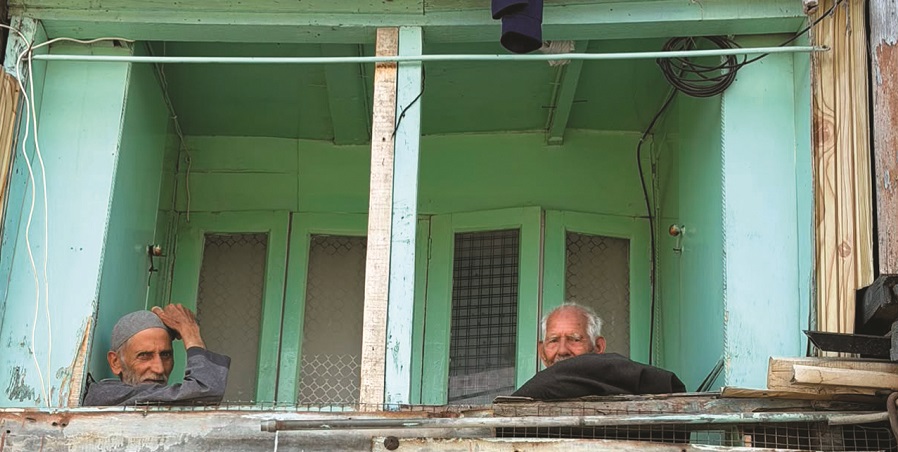
Traditional Balconies as Spaces for Social Interaction – Photographer: Pallavi Gupta
PEOPLE “VOTE” WITH THEIR FEET!
The migration itself tells us something very important. It reveals a gap between ‘nostalgia’ and ‘lived reality’. Well, none of this means that heritage lacks value. In fact, I deeply believe in preservation. But “preservation” and “romanticisation are not the same things.
A thing survives when it continues to serve a purpose. Take the “Samovar” (a traditional, hand-crafted metal kettle used in Srinagar to brew, boil, and serve Noon Chai (salted tea) and Kahwa), for example. It remains culturally relevant, because people still continue to use it. It adapts to modern life, while retaining its historical significance. It is preserved not merely as an object to be photographed, but also as something that still participates in contemporary culture.
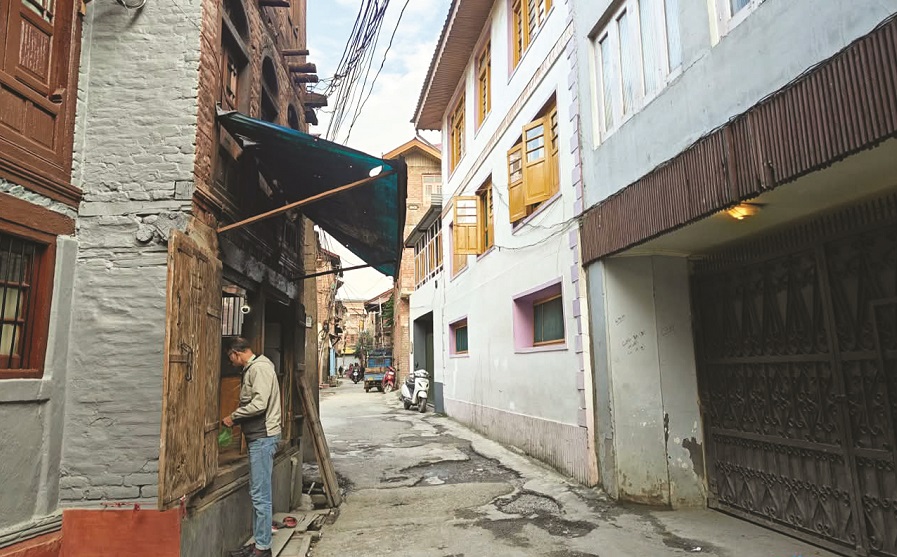
Contemporary Alterations Within Traditional Residential Streetscapes – Photographer: Huzaif Mushtaq
Can we honestly say the same about every historic structure in Downtown?
How many of these buildings are being preserved, because they continue to serve people, and how many survive merely as backdrops for photography, videography, and social media content?
That distinction matters!
Conservation does not mean endlessly celebrating the past! It does not mean pretending that every old structure represents a model for the future. It means understanding what deserves to be protected, why it deserves protection, and how it can remain relevant within a changing city. People often point to historic districts elsewhere and ask why they continue to thrive. The answer is that many of these places still possess strong economic and functional value. Traditional marketplaces continue to operate. Food cultures continue to generate commerce.
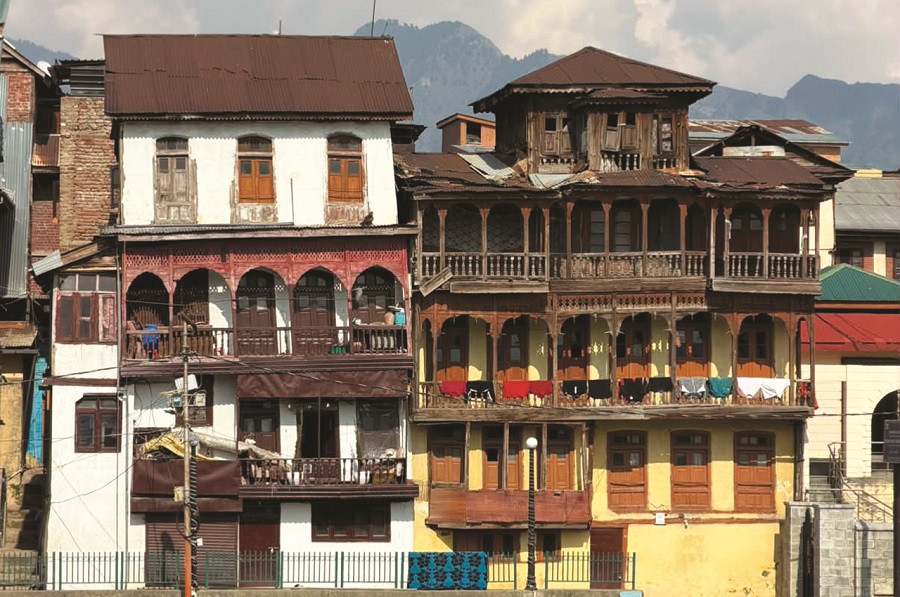
Intricate Timber Craftsmanship in Traditional Residential Architecture – Photographer: Pallavi Gupta
Tourism Supports Local Economies
Historic urban forms remain integrated into contemporary life. Their ‘heritage value’ and ‘functional value’ reinforce one another. That is very different from preserving something solely, because it looks beautiful in photographs. My argument is not that the “Downtown” should disappear. It absolutely should not! It should be preserved, restored, documented, studied, and celebrated. It remains one of the most important cultural landscapes in Kashmir.
But we need to stop treating it as the answer to every “conversation” about the city. We need to stop confusing heritage with functionality, nostalgia with urban planning, and aesthetics with value. A city cannot live entirely in its past. It has to honour its history, while also responding to the realities of the present.
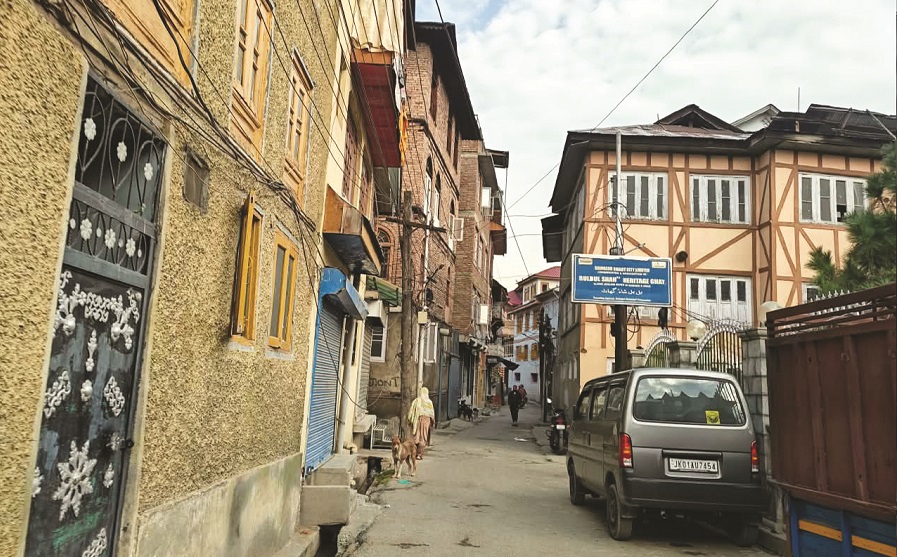
Traditional Streetscapes Shaped by Dense Urban Development – Photographer: Huzaif Mushtaq
The “Downtown” deserves respect!
What it does not deserve is….Blind Romanticisation!
*** Feature Photo Caption: Ornate Timber-Framed Windows with Traditional Glazing Details
Feature Photo Photographer: Pallavi Gupta
Image Courtesy: Vasila Khurshid and Respective Photographers