Guiding the Hands Designing Tomorrow: Fostering Future Design Leaders
Across thousands of design institutions worldwide, there are infinite creative minds ready to showcase their designing skills and path-breaking ideas that only can be executed by large conglomerate architectural and urban planners. The freshness of the GEN Z’s ideas is equipped to better the future for all of us. These raw talents should not only be encouraged, but also should be mentored by seniors in the industry – so as to groom the design leaders of the future.
GEN Z Series – our niche category has featured some of the most outstanding talents and they are doing exemplary work in renowned firms across the world. It fills my heart with pride to see these young professionals achieving great success in their respective fields with sheer excellence.
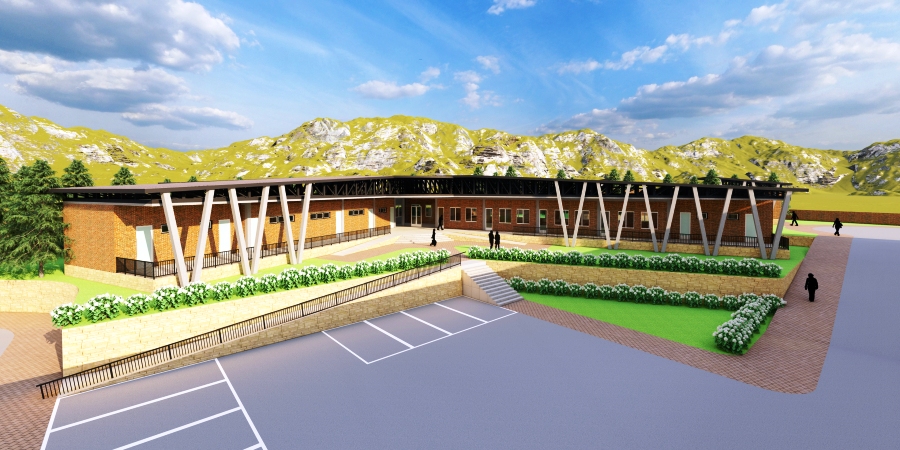
Admin Block
Journey to the Ancient Kingdom
I have had the opportunity to travel to some of the most fascinating places to meet younger professionals. The journey to the 9th Century historic city of Awantipora in Jammu and Kashmir, founded by King Avantivarman of the Utpala Dynasty to meet Vasila Khurshid – a 2023 graduated Bachelor of Architecture from the School of Architecture, Kashmir, affiliated with the Central University of Kashmir – will be etched forever in my memories.
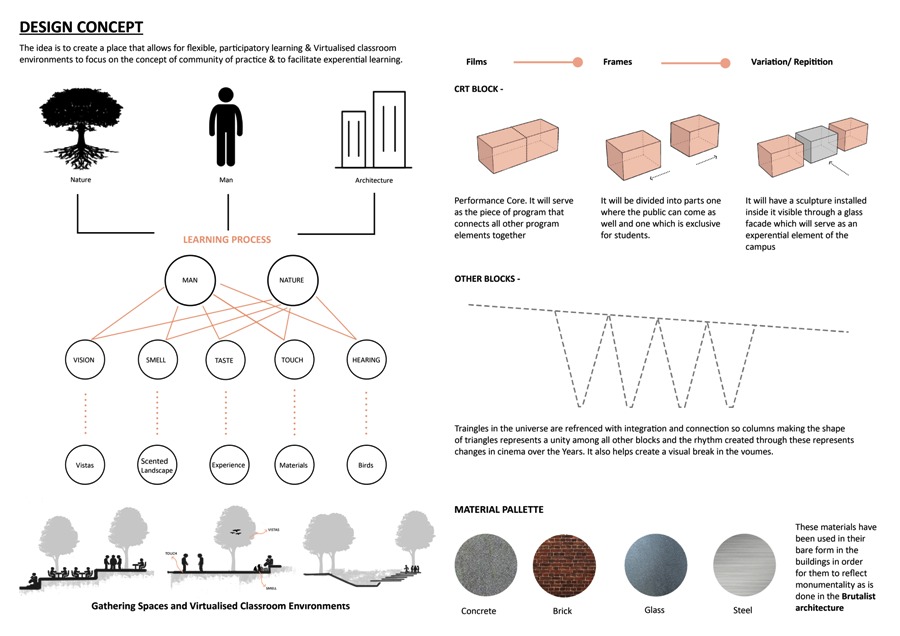
Design Concept
Vasila Khurshid is ambitious, hard working, meticulous and creative to the core. She articulates flawlessly, “I was born and raised in Srinagar, a city whose landscape, culture, and rhythm have shaped the way I see the world. My father is a Senior Pharmacist and my mother a Senior Grade Technologist; both have built their careers within the medical profession, a field deeply respected in our household (smiles).”
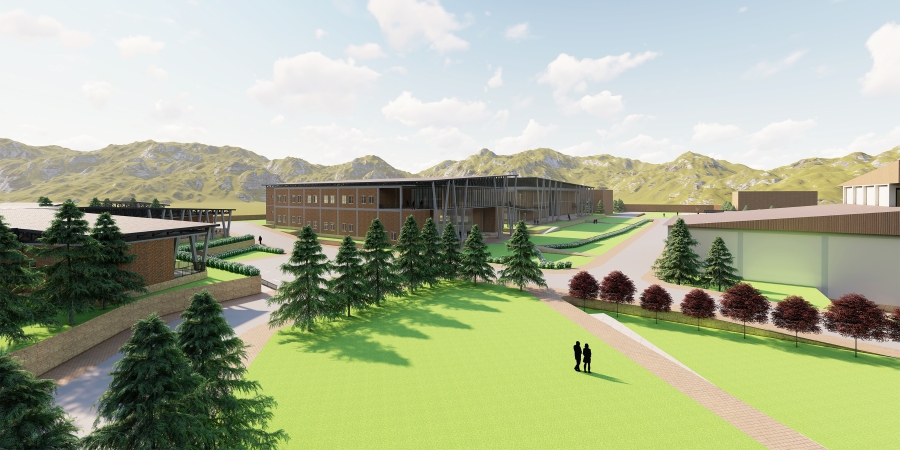
Spectacular Site View
Inquisitive by nature, the young Vasila Khurshid had many questions that was looking to be answered for her understanding and personal growth in life. She reminisces, “I found myself drawn towards different direction, not away from my roots, but towards a field that allowed me to ask different kinds of questions. I was always curious about how people live, how culture organized itself around space, and how the everyday rhythm of a city is quietly shaped by the built environment around it. That curiosity, nurtured through years of travel and observation, eventually led me to architecture.”
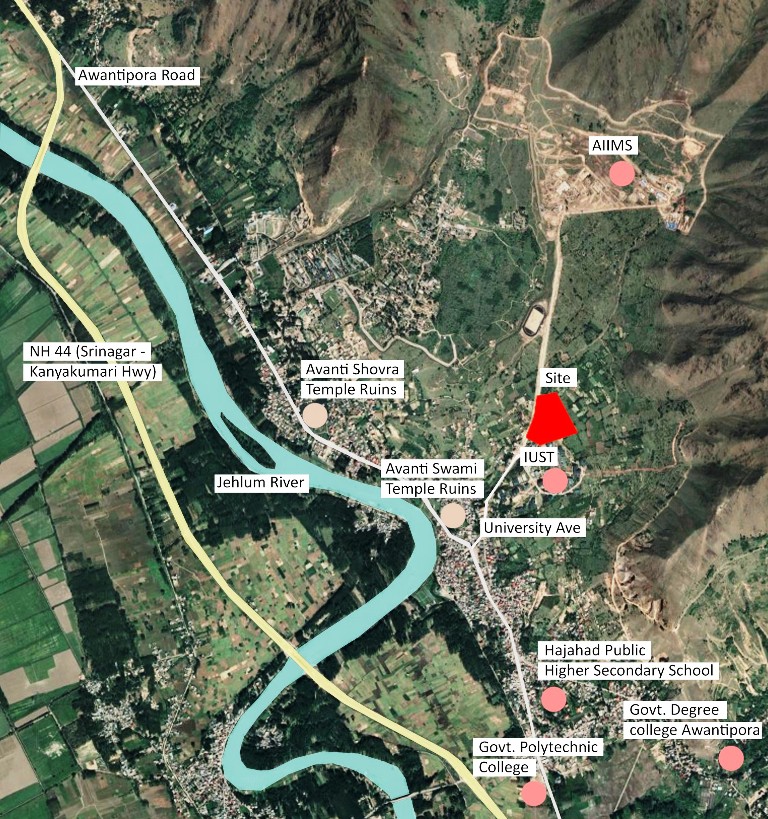
Site Location
Vasila Khurshid initially worked in core architectural practice after her graduation. She adds, “The nature of work available in J&K does not fully align with my creative growth and expectations, both in terms of design exposure and financial sustainability. Additionally, opportunities within the field have been quite limited.
As a result, I chose to shift my primary focus toward content writing, where I have been working on real estate and design-related articles. At the same time, I continue to stay connected to architecture by taking up freelance projects whenever possible.”
Not ‘the’ one to give up so easily with local challenges ahead and her State’s current state, the stellar confidence of Vasila Khurshid has set her eyes on going abroad for her Master’s degree. With wings to fly higher, this Jammu and Kashmir girl showcases her architecture thesis and shares her quest in an amazing interaction with Johnny D.
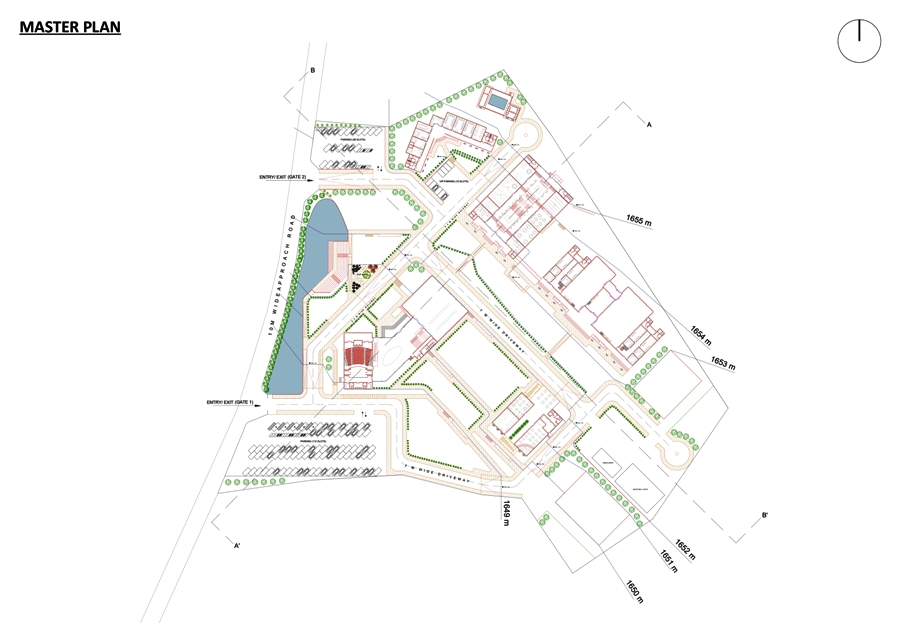
Master Plan
What was your childhood ambition? Have you always wanted to become an architect?
I was the kind of child who reinvented her career goals regularly (smiles). However, what remained constant was a deep sense of curiosity and ambition.
Family travels across different cities in India opened my horizon to a new world. I found myself quite drawn to the rhythm of everyday life, how people moved through their spaces, how culture shaped the way a street felt, and how different communities built their daily existence into the fabric of a place. That curiosity, over time, quietly guided me towards architecture without me fully realizing it.
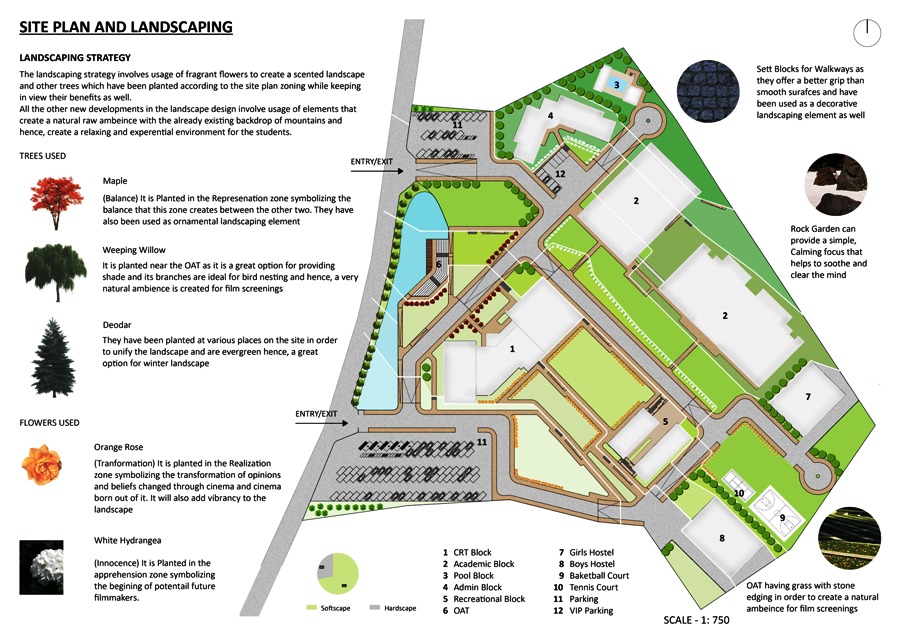
Site Planning and Landscaping
How has architecture influenced your life as a student?
As a student, I discovered I could finally deconstruct what I had always instinctively felt. I remember visiting Jama Masjid in New Delhi as a child, thrilled by its energy, packed lanes and its street life. Returning as an architecture student, I saw the same Gully (lane) as an urban fabric with historical roots, a living informal economy and a space of profound cultural depth.
Architecture also reshaped how I understood a home. Designing residences taught me to read people, their habits, values, and relationship with space, and deepened my respect for diverse cultural contexts.
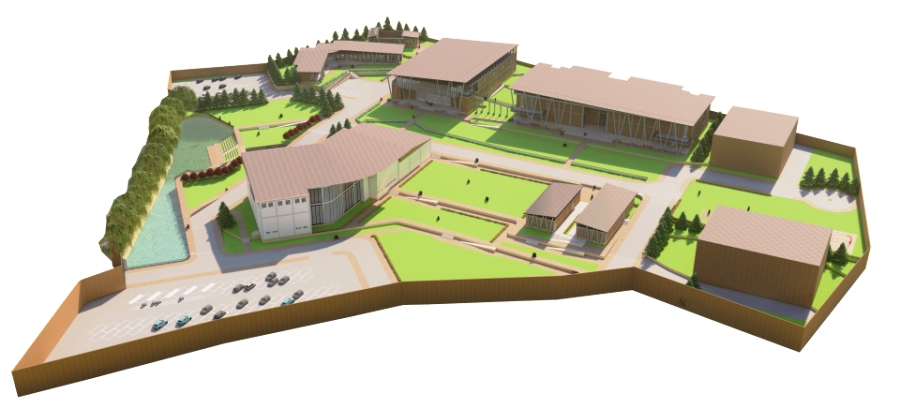
Bird’s Eye View of the Site
Briefly tell us about your University and the Course.
I completed my Bachelor of Architecture from the School of Architecture, Kashmir. I was part of the foundation batch, the very first group to study architecture there, before which students from Kashmir had to leave home to pursue the discipline.
Being the “foundation batch” student meant no seniors, no established studio culture, and limited local resources. Some days that meant fighting for basic facilities and recognition. But in hindsight, we were not inheriting a culture, but we were building one (smiles).
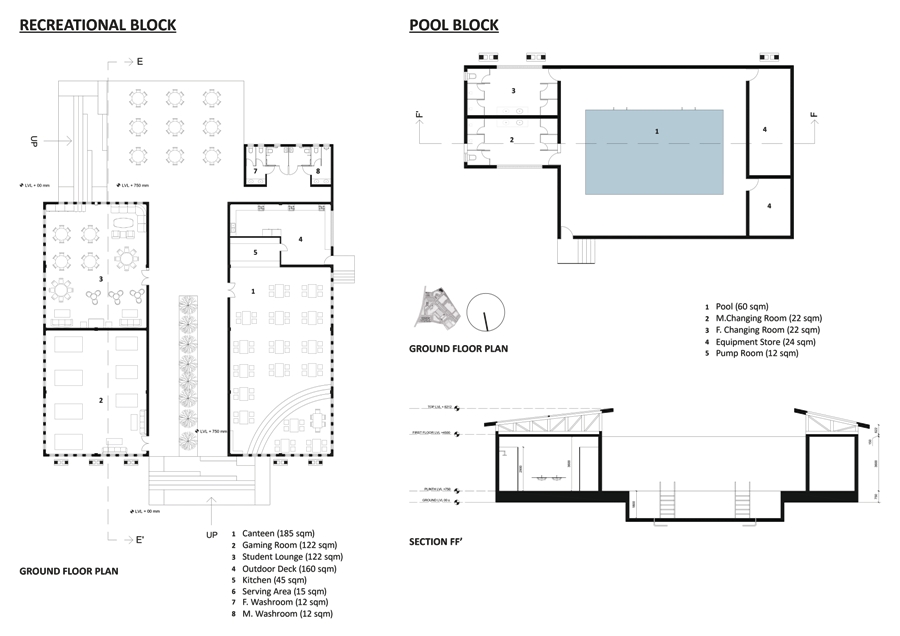
Recreation Block Plan & Pool Block Plan and Section
Briefly describe the significance of your project with the Title of the Project and Site Location.
Cinedemy: A School of Filmmaking, Awantipora, Jammu and Kashmir, India
Cinedemy was conceived as a bridge between cinema and society, a space where communities could engage with the art of filmmaking not merely as audiences, but also as active participants and future creators.
My Bachelor’s thesis, responds to a quietly urgent reality. Filmmaking as a career remains largely inaccessible to talent emerging from Kashmir, with little infrastructure to nurture or retain creative potential locally. The regional film industry is constrained by a lack of financial resources, new talent and accessible opportunity.
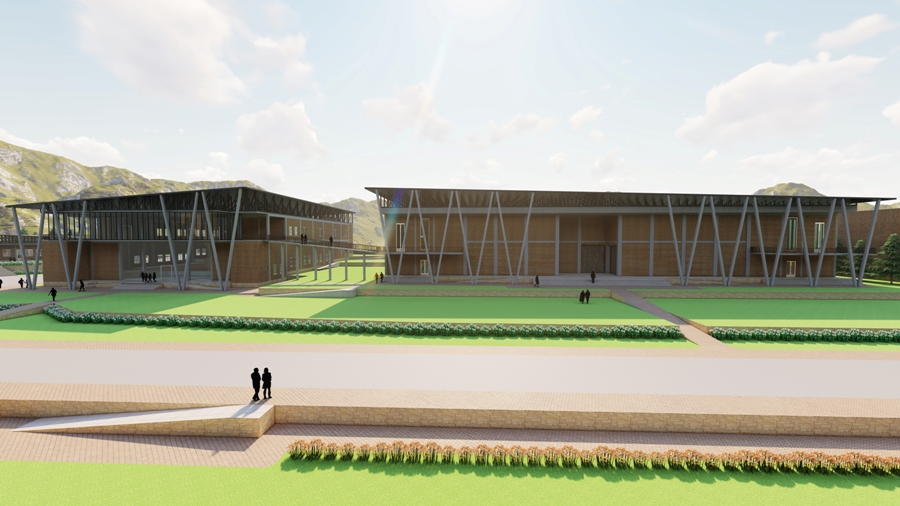
Front View of Academic Block
Between 2010 and 2014, 10 to 15 Kashmiri serials aired and found genuine popular followings. Today, none of them are in production anymore. Cinedemy was proposed as a direct answer to fill that gap.
The site at Awantipora was chosen deliberately. With the Islamic University of Science and Technology already established in the area and the AIIMS coming up nearby, the region holds real potential to become an educational hub. The proximity to the ancient ruins of Avantishwar and Avantiswaami temples offers students and filmmakers a historically rich environment for creative exploration.
Beyond education, Cinedemy carries broader economic and social significance, generating employment, supporting freelance artists, attracting film tourism, and reviving a cultural industry that Kashmir deserves to reclaim.
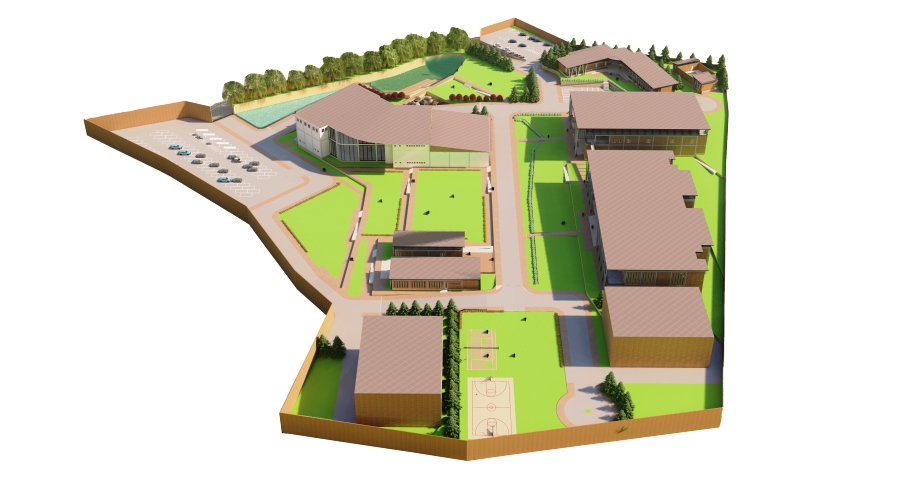
Physical Model
Which National or International architect has inspired / influenced you? Please specify as to why.
The architect who has influenced me the most profoundly is I.M. Pei. Two projects speak to me especially: the ‘Louvre Pyramid’ and the ‘Suzhou Museum’. Both demonstrate how glass and raw materials, handled with intention, can feel simultaneously bold and serene, no unnecessary ornamentation, just form, light, and materials in harmony.
I have always been drawn to the Mid-Century Modernism and material honesty. Spaces built in this language give me a sense of calm, a Zen that is increasingly rare. In a world where people struggle to find peace, architects have a responsibility to explore what simplicity can offer. I.M. Pei demonstrated that restraint is not limitation, it is elegance! That is a lesson I carry into my own work.
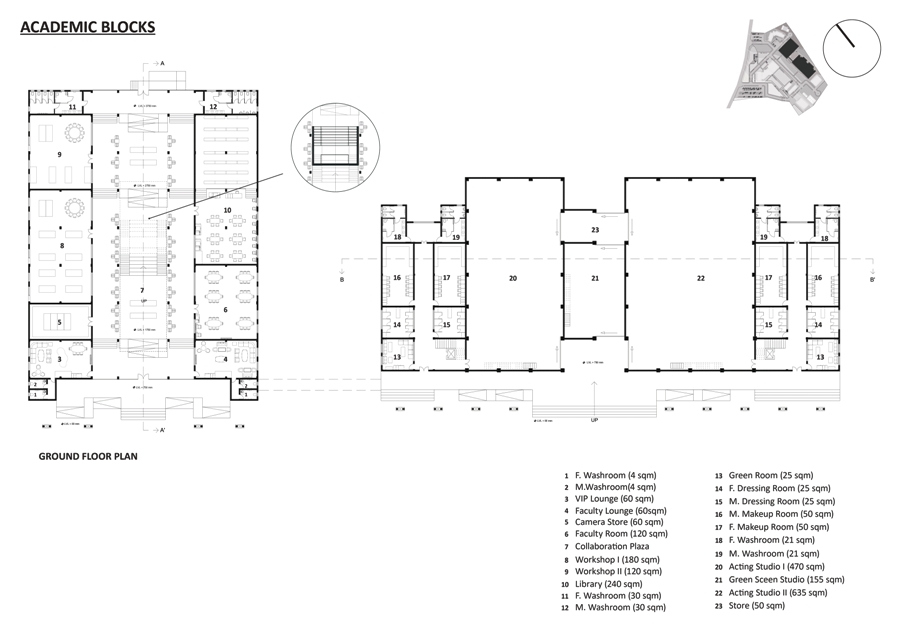
Academic Blocks – Ground Floor Plan
As an Intern, what is the most important lesson you have learned from senior architects, while being part of a project?
The most important lesson is deceptively simple: understand the people and context you are designing for before anything else. Whether it is a private residence or a public space, design must begin with a genuine understanding of who will inhabit it, how they live, what they value and the context demands. That is what consistently produces work that is not just good, but meaningful.
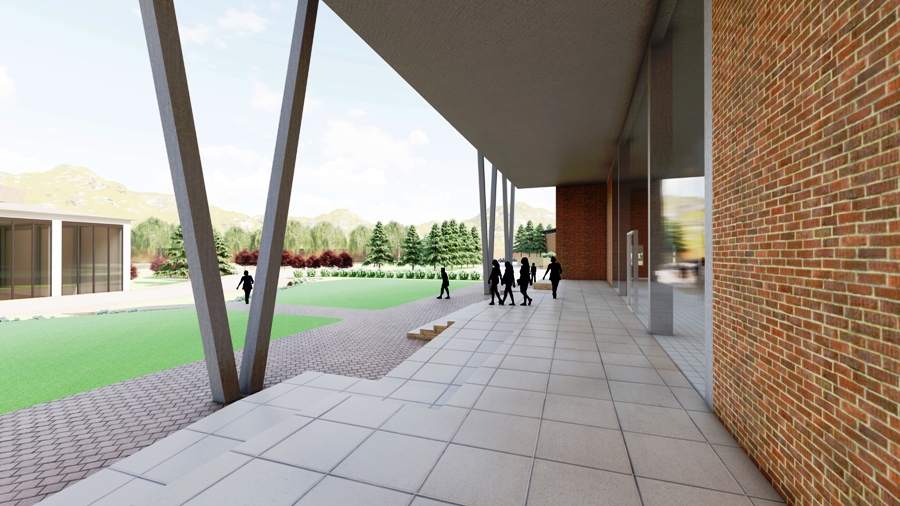
Close-up View from Academic Block
What are the current prospects and challenges of job opportunities for fresh young architects in Srinagar, Jammu and Kashmir, India?
There exists a fundamental gap in how architecture is understood. Many practitioners lean heavily toward engineering and technical execution, while the philosophical and research-driven dimensions remain underexplored. The conversation between architect and client is slowly evolving, but the bridge between design philosophy and public understanding is still being built.
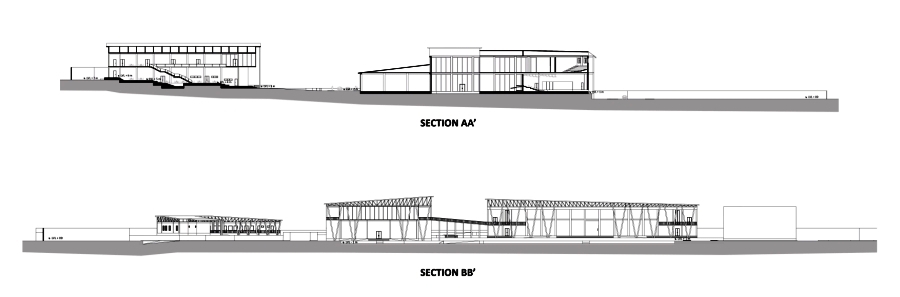
Site Sections
Compensation remains ‘the’ critical issue – architects with years of experience are offered remuneration that bears little relationship to their qualifications. Compounding this, non-architects frequently position themselves as architects, undercutting fees and forcing qualified professionals to compromise their rates. The result is a race to the bottom that harms the quality of the built environment.
What the region needs is a stronger professional framework, rooted in design philosophy and research, protecting architectural practice, establishing fair compensation, and creating structured opportunities for young talents!
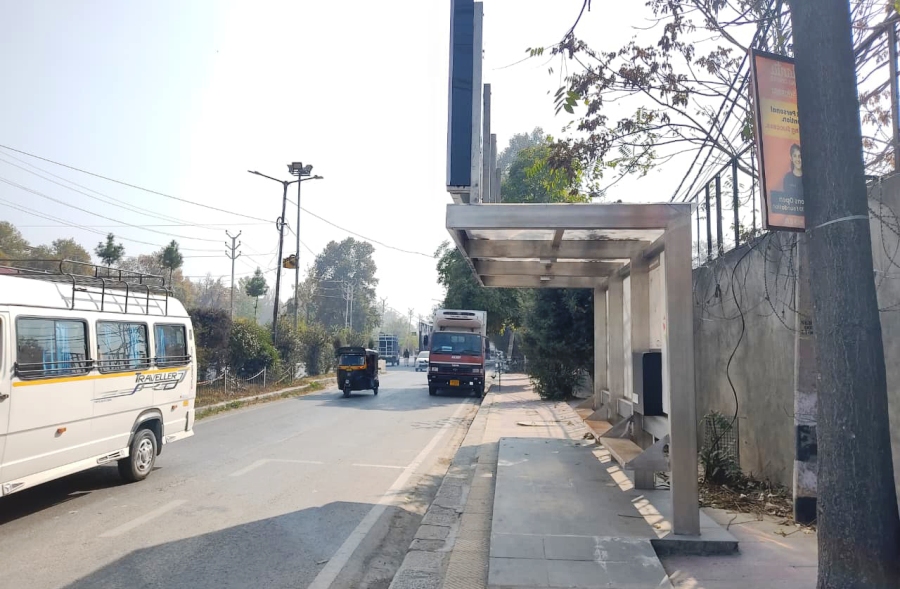
Bus Stand Shelter, Maulana Azad Road, Srinagar – Hostile Architecture
Bus Stand shelters have become iconic symbols of ‘Hostile Architecture’. Elucidate how Bus Stand Shelters can be made commuter-friendly.
A bus shelter is one of the most democratic pieces of architecture in any city, yet most are designed with indifference. The first principle must be inclusivity: wheelchair access, seating for the elderly, and safety for women and children at all hours. Shelters should transition between open and enclosed configurations depending on weather, essential in regions like Kashmir where winters are severe and hailstorms frequent.
Raw materials, stone, steel, glass, used honestly can produce shelters that are climate-responsive and visually elegant. When designed with real seriousness, a bus shelter stops from being just street furniture and can be transformed as a quiet landmark.
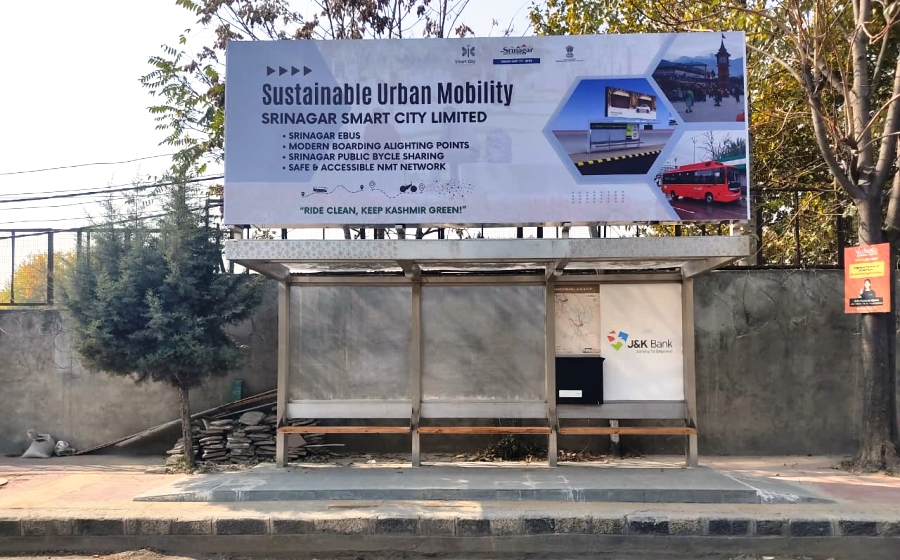
Bus Stand Shelter, Maulana Azad Road, Srinagar – Hostile Architecture
Which significant aspects of the global platform ‘zerobeyond – the new frontier!’ did you like the most, and why?
What strikes me the most is ‘zerobeyond – the new frontier!’s unconditional inclusivity! Every architect, regardless of origin, is given equal space to share their context and experience. As someone from Kashmir, a region rarely represented in global architectural conversations, that matters deeply.
Beyond networking, ‘zerobeyond – the new frontier!’ elevates architecture beyond its technical dimensions, giving the profession philosophical weight: a space to ask not just how buildings are made, but also why they matter.
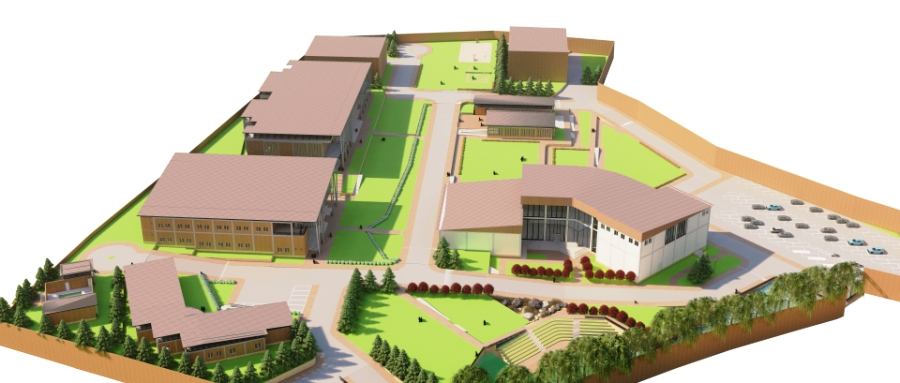
Bird’s Eye View of Site Physical Model
The “Global Urban Failure” has seen all major cities being flooded each year repeatedly. Elucidate your perspectives and solutions as an Architect in respect to Jammu and Kashmir, India.
Kashmir is not a distant observer of this crises, it has lived it during the September 2014 floods, the worst in over a hundred years. The causes were not purely natural, but also human greed – Rapid Urbanisation, Never-ending Encroachment of Wetlands and Unchecked Construction – all have contributed in blocking natural drainage to intensify the man-made disaster.
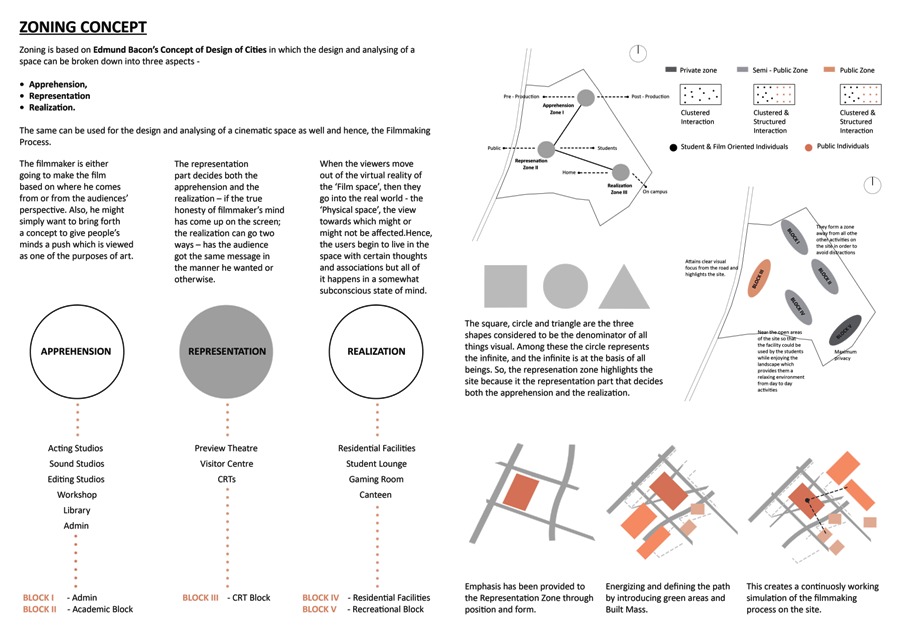
Zoning Concept
As an architect, my perspective begins with recognizing that Kashmir cannot be treated as a single climatic zone. Solutions must be microclimate-specific, not blanket policies applied uniformly. Strict enforcement of building permissions and zoning laws is equally critical, unchecked construction in flood-prone areas must not only end, but also banned completely.
Finally, we must move away from concrete-dominant construction. Climate-responsive materials, permeable surfaces and water-sensitive spatial design are practical responses to a reality we can no longer ignore.
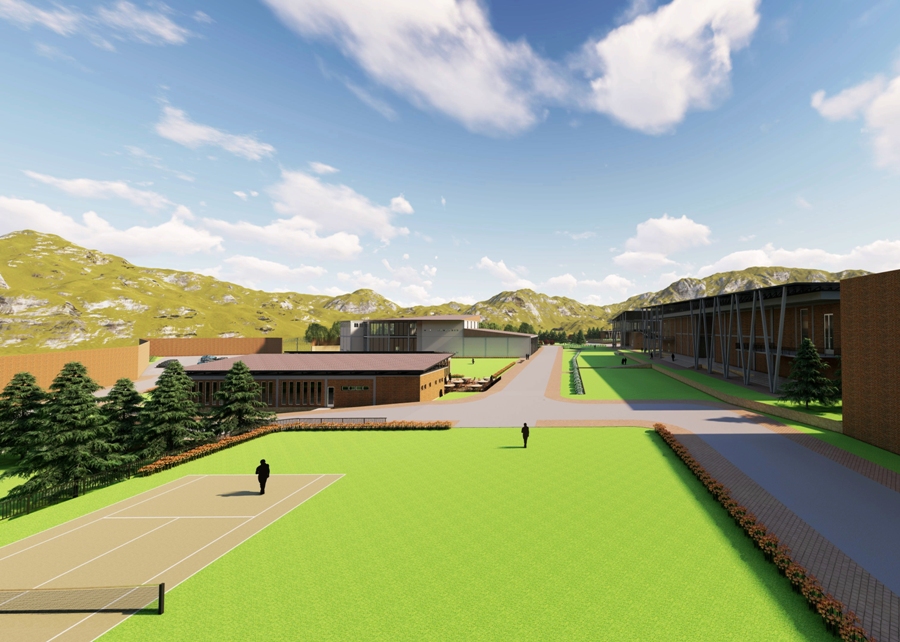
Landscape View from Hostel Block
Looking at the past in the present, what are the futuristic architectural changes you would like to see in your home city/town?
Kashmir has a rich architectural heritage, the ‘Khatamband’ ceilings, the ‘Taq and Dajji Dewari’ craftsmanship. These traditions deserve deep respect. But respect for the past cannot become resistance to the future.
What I would like to see in Srinagar is a genuine architectural evolution, one that honours its roots, while boldly engaging with the present. Movements like minimalism and deconstructivism remain largely unexplored here. Material experimentation is equally overdue; greater use of glass, sustainable materials, and contemporary innovations could transform both the aesthetics and performance of our built environment.
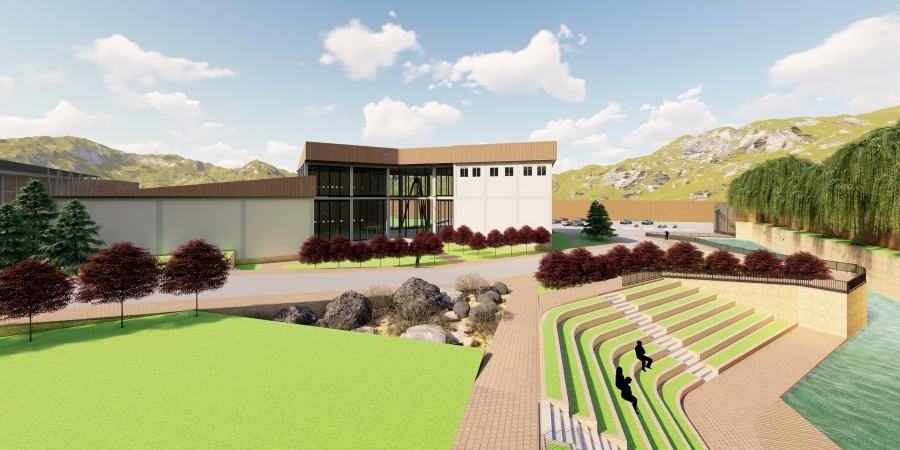
View from Open Air Theatre
Image Courtesy: Vasila Khurshid