GEN Z Series: Redefining Global Architecture’s Paradigm
When we started ‘zerobeyond – the new frontier!’ in August 2021, I had specifically stated: ‘As we take our first step, we are not here to chase trends—we are here to set benchmarks. Our content aims to leave lasting footprints in the global media landscape’.
Right from the beginning, we have set a very high standard to create one “Benchmark” after another to the greater good of the architecture world. In less than 5 years, the formidable impact our niche GEN Z Series has created in the global architecture is simply peerless!
Renowned architecture firms like Chapman Taylor, Broadway Malyan and now Arup are giving prominent space to their younger generation professionals to showcase their creativity and understanding – this is something that used to be unheard of decades ago. Please note, these three instances has come to my notice out of nowhere – much to my joy, pride and truly surprising indeed!
This astounding paradigm shift will not only benefit the younger generation of professionals working in renowned conglomerate firms, but also develop greater confidence in their professional growth. I must really thank these renowned firms for their new approach towards the younger generation influenced by our irresistible GEN Z Series.
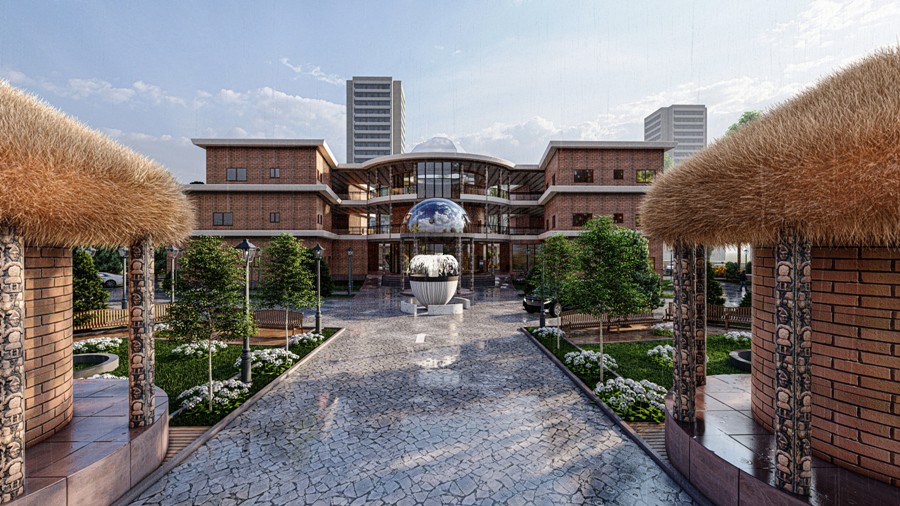
SHOFAR Entrance
Arup had recently shared their Landscape Architect – Urban Designer in Kuala Lumpur – Maryam Zulkifli’s stories to mark “International Women in Engineering Day”. Ref: https://www.linkedin.com/feed/update/urn:li:activity:7470780858128285697/
Footprints of Our Benchmark
On the 13th of November 2025, we had featured Iranian Ph. D Candidate Reyhaneh Raisi in our GEN Z Series. She has focused her Doctoral Research on “Neuroarchitecture and Neurolandscape, exploring how architectural and landscape environments influence the brain, perception, and emotional well-being”.
Below paragraphs are from Reyhaneh Raisi’s interview article:
‘zerobeyond – the new frontier!’ had featured Romanian Architect Amalia Radasanu on the 23rd of June 2023 https://zerobeyond.com/mumbles-seaweed-world-swansea-uk/
Interesting to see how Chapman Taylor presented Amalia Radasanu on their website on the 21st of May 2025 https://www.chapmantaylor.com/news/people-profile-amalia-radasanu-on-working-as-an-architectural-assistant-and-studying-for-a-masters-degree-through-chapman-taylors-apprenticeship-programme
On similar lines, Broadway Malyan presented Ally Tan on their website on the 15th October 2025 https://www.broadwaymalyan.com/design-and-insight/five-minutes-with-ally-tan/
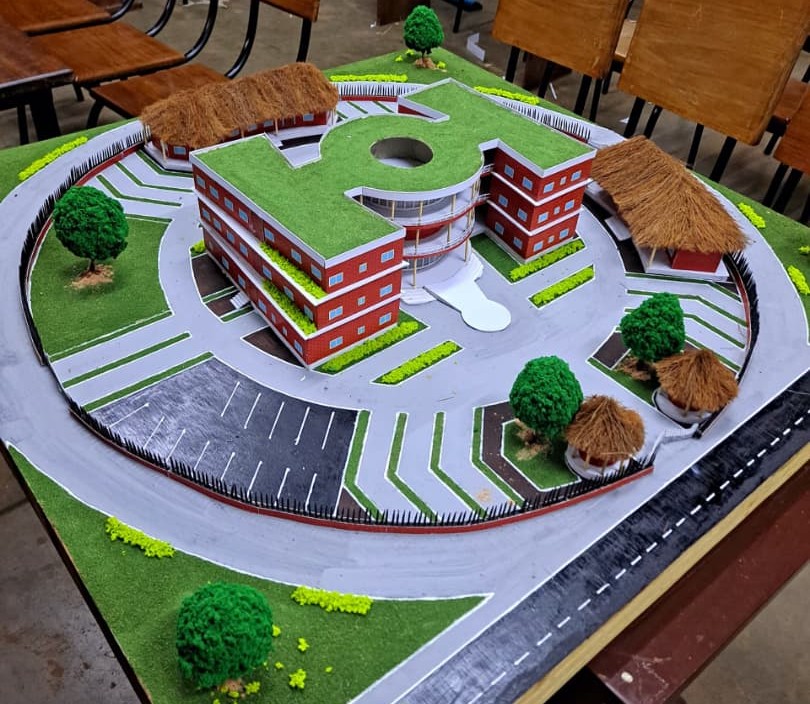
Master Plan – Physical Model
I am happy to see younger professionals are getting the much-required space in renowned architecture firms — this has always been my dream to see the younger generation – who are going to design and save the future world – get their creativity being unleashed and noticed on a global parameter.
Empowering the younger generation of professionals by seniors is the first step and the most significant one in the field of architecture.
The history of architecture reveals this universal mentorship has created outstanding and renowned architects in every parts of the world. ‘zerobeyond – the new frontier!’ is committed and will always encourage the younger generation of professionals, who may never get the chance to give interviews in global media even after 15 or 20 years of being in the field.
We have changed this age-old tradition to create the new benchmark for the younger generation – the future of tomorrow’s renowned architects.
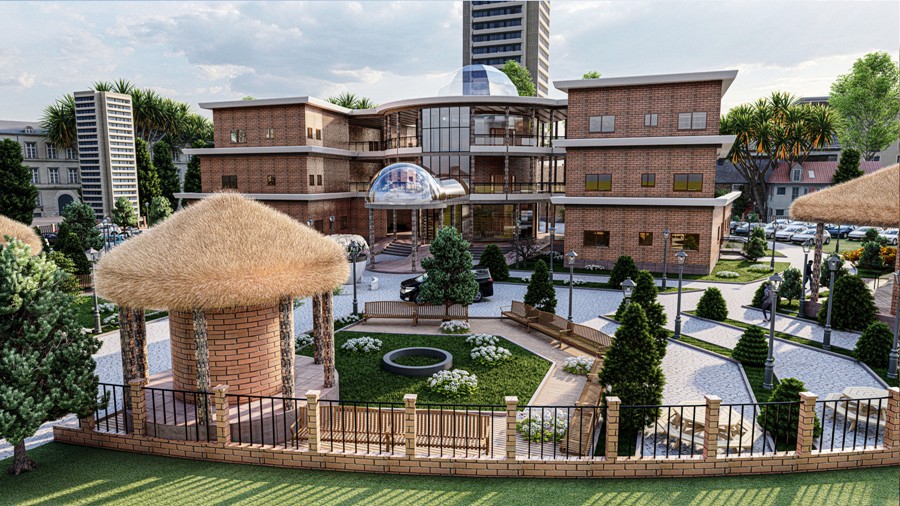
SHOFAR Center Overview
TALENT from CAMEROON
The GEN Z Series has travelled across the continents to interact with some of the most amazing and talented young professionals across the fields. Each one of them has taught me something new and something truly mesmerizing during our interactions. Ndaseh Ngwe Penanje, hailing from the Northwest Region of Cameroon, completed her Master’s in October 2024 from the NASPW – National Advanced School of Public Works, Yaoundé, Cameroon.
A very talented, committed, meticulous and respectful Ndaseh Ngwe Penanje enthuses, “I grew up in very a supportive family. My father retired as a Tax Inspector. My mother, a seasoned Primary School Teacher and skilled homemaker, models the balance between academics, career, and family with great calmness and diligence.”
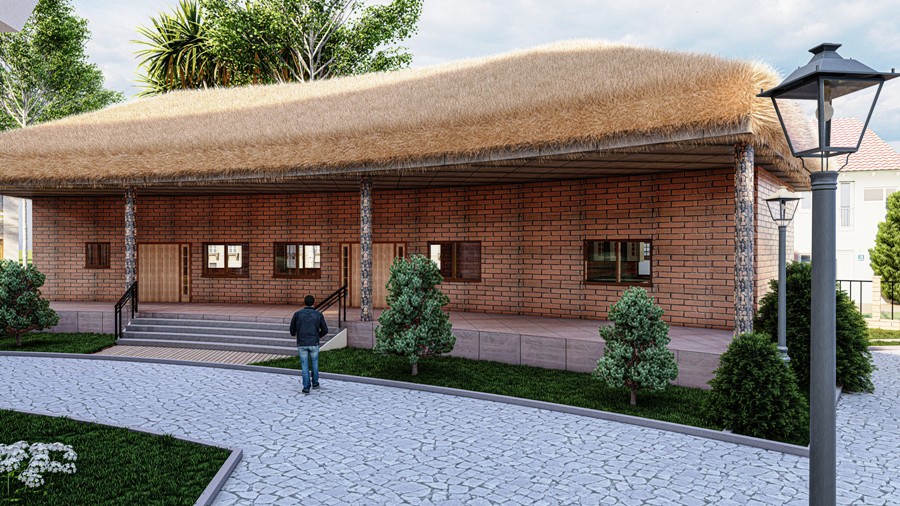
Restaurant
Ndaseh Ngwe Penanje is a committed professional. Excellence of greater knowledge is imbibed in her state of being. She reveals, “Currently, I am applying for Ph. D studies in Architecture at Makerere University, Uganda, with a focus on energy efficiency and the use of local materials in building envelopes. My academic journey is driven by a passion for Africa and the belief that architecture can transform communities through sustainable design. To strengthen my expertise, I pursued EDGE – Excellence in Design for Greater Efficiencies’ training and earned accreditation as an EDGE Expert by IFC, World Bank Group.”
A creative individual is on an accomplished mission, Ndaseh Ngwe Penanje informs, “I am committed to contributing a female perspective to a field often dominated by men, and to advancing sustainable housing solutions across Africa. My background, family support, and professional training position me to make meaningful contributions in academia and practice.”
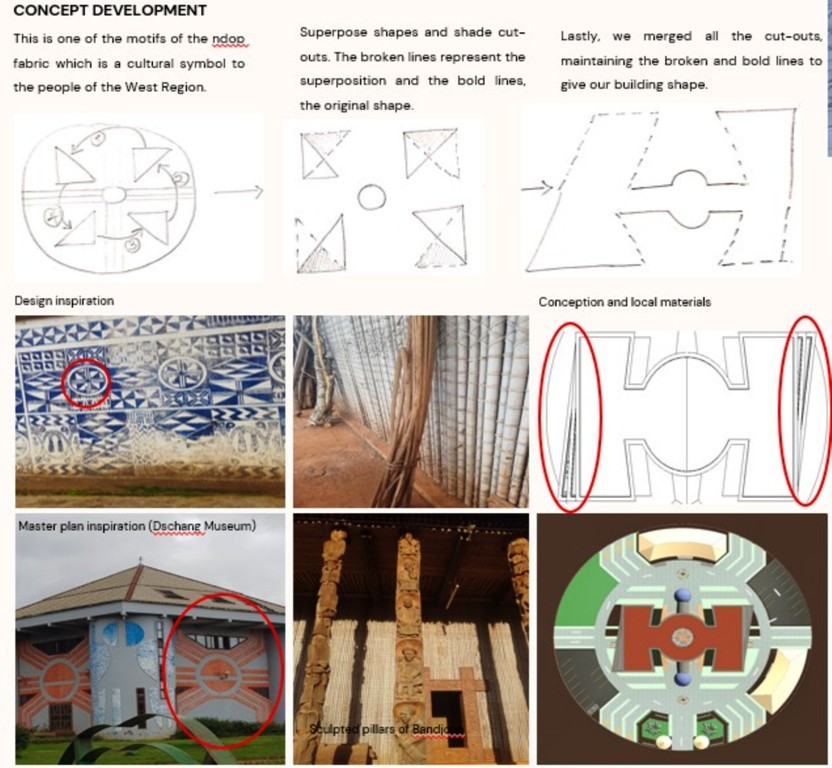
Concept Development
Johnny D interviews the Cameroonian jewel Ndaseh Ngwe Penanje:
What was your childhood ambition? Have you always wanted to become an architect?
“Daddy, what do these lines mean?” – I asked as a 10-year curious kid. I watched my father discussing with an architect over the design of our current home. This simple exchange sparked my interest in architecture – a field where we can live the end of a story before the actors (property owners) have even taken the stage. This powerful moment cemented my path, leading me to pursue the full Master’s program in Architecture at the National Advanced School of Public Works.
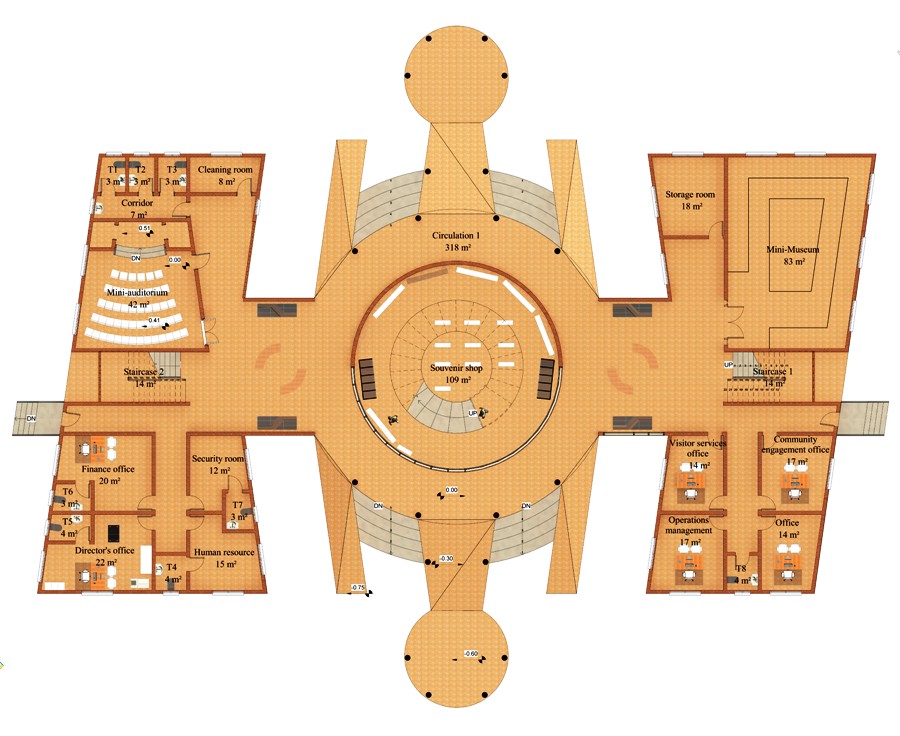
Plan – Ground Floor
How has architecture influenced your life as a student?
Entering Architecture school, I did not know what to expect. But over the years, this field transformed not only my approach to problem solving, but also the way I think. I moved from aesthetics focused only to developing strong visual skills, learning to read and understand my environment in a completely new way. I understood that spaces must be accessible, inclusive, and shaped around the real needs of people.
Learning design meant learning empathy! Recognizing the significance behind every choice, the intention in each line, and the bravery required to bring ideas to life. The late nights, and school project critiques built my resilience and helped me develop my unique perspective. Through architecture, I embraced my African identity in the built environment.
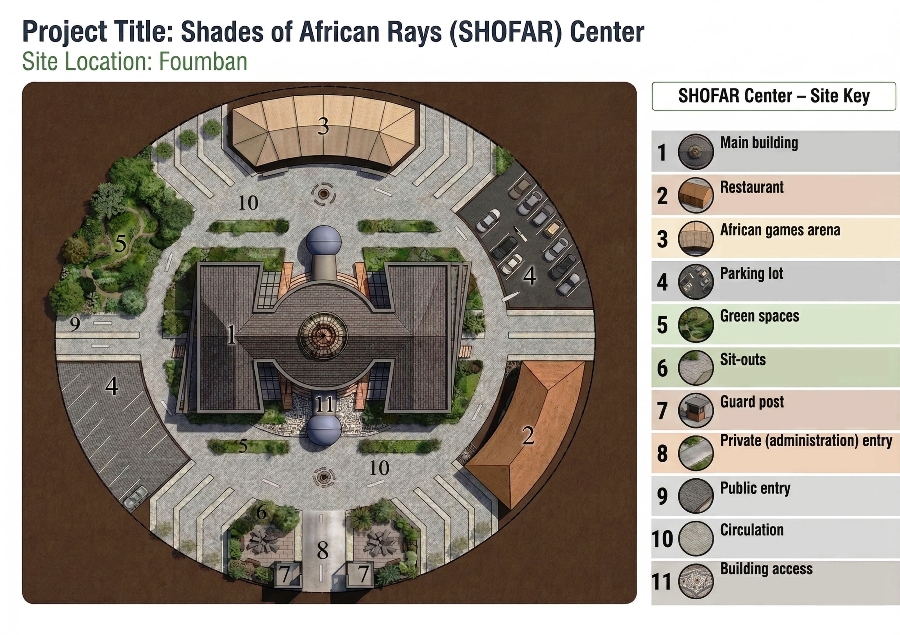
Master Plan
Briefly tell us about your University and the Master’s Course.
The National Advanced School of Public Works Yaoundé, Cameroon is a professional institution responsible for training specialists in public infrastructure and the built environment. It operates under the technical supervision of the Ministry of Public Works and the academic supervision of the Ministry of Higher Education.
NASPW offers full Master’s programs in several key fields, including Civil and Environmental Engineering, Land Surveying, Town Planning, and Architecture, combining theoretical instruction with practical field experience to prepare graduates for national development needs.
The Architecture program was handled by Cameroonian and Italian lecturers from the University of Padova, who provided adequate training in design, construction technology, building science, and urban development amongst others. This integrated approach equips students to contribute effectively to planning, design, and construction projects across both public and private sectors.
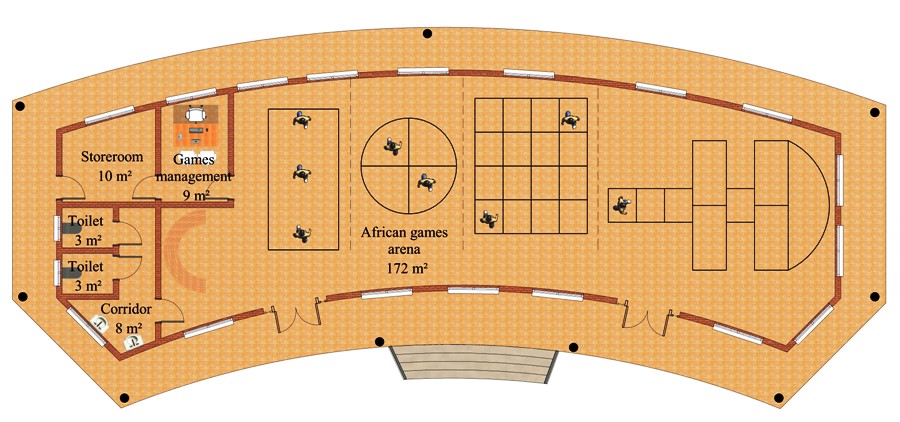
Plan – African Games Arena
Briefly describe the significance of your project with the ‘Title of the Project and Site Location’.
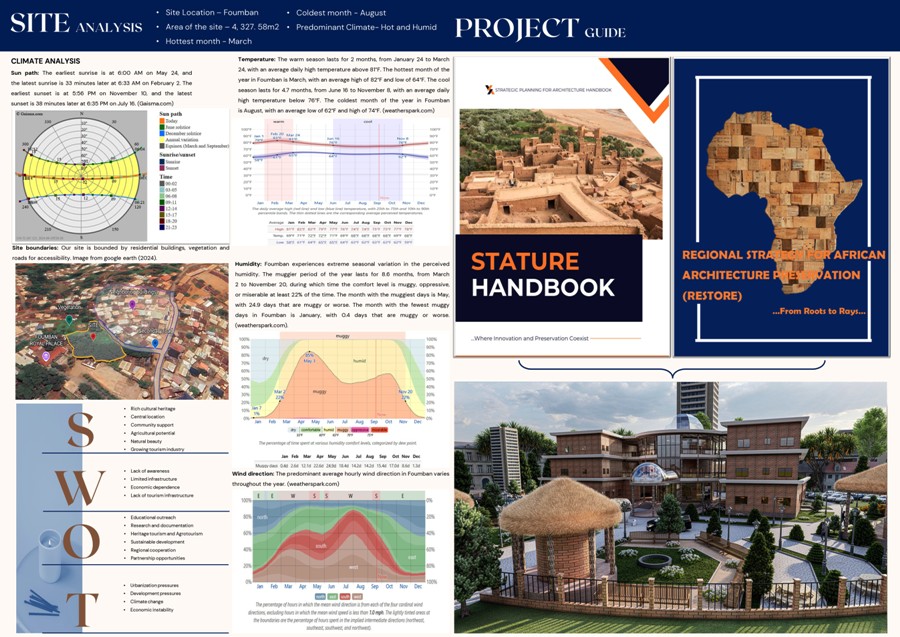
Project Title: SHOFAR Center – Shades of African Rays
Site Location: Foumban
SHOFAR Center is a direct architectural response to the RESTORE – Regional Strategy for African Architecture Preservation, a framework I developed to demonstrate how built forms can stem directly from strategic planning in Cameroon’s West Region. Located in the culturally rich city of Foumban, this center serves as a vital intervention in the West. The name SHOFAR stands as a symbolic call to contextual action, sounding the alarm for all Africans to embrace their heritage and become the architects of their own solutions.
The project’s master plan is symbolically rooted in local identity, drawing inspiration from the tarantula-a significant motif in regional iconography, while the building’s physical form is derived from symbols found on “Ndop”, the traditional fabric of the ‘Cameroon Grassfields’, and the tilted floors showing the movement on the Sun’s rays from one source.
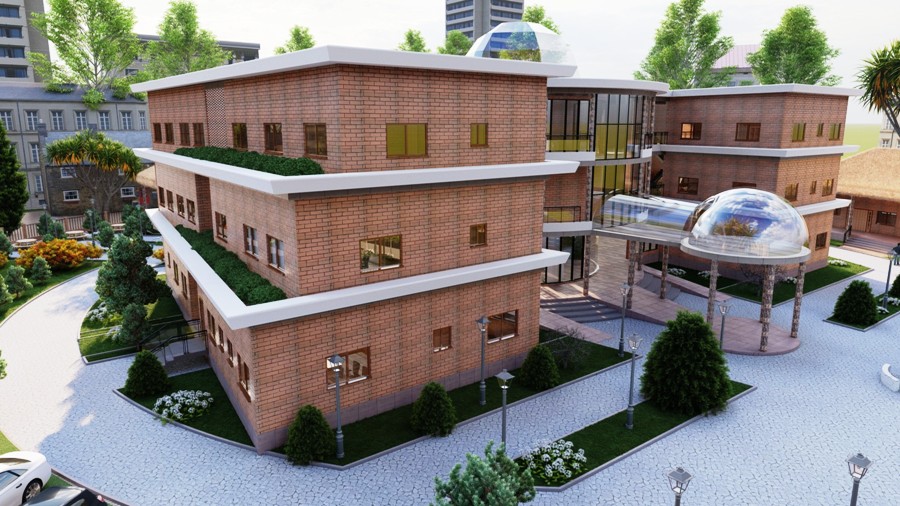
Tilted Floors View
A central feature of the design is the staircase, modeled after the Shofar horn itself. Just as the sound of a shofar diminishes as it travels, the staircase connects spaces with decreasing noise levels as one ascends, creating a transition from vibrant public interaction to quiet, and contemplative preservation zones. Beyond its aesthetics, the center addresses a critical gap identified during my research: the lack of effective knowledge-transfer mechanisms in existing museums.
By functioning as an Architecture Preservation Centre, the SHOFAR Center creates a synergy between heritage preservation and heritage transfer, ensuring that ancestral wisdom and modern sustainability meet to secure a resilient cultural future.
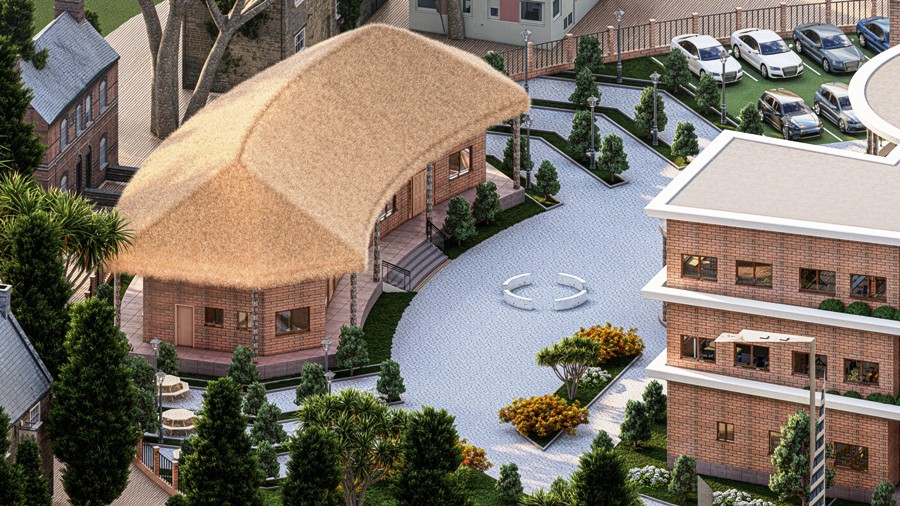
A View of African Games Arena
Which National or International architect has inspired / influenced you? Please specify as to why?
I am deeply inspired by Nigerian architect Olajumoke Adenowo, Founder of AD Consulting. Her ability to weave faith, powerful communication, and Pan-African excellence into her design concepts serves as a blueprint for my career. Her vision of positioning Africa on the global stage perfectly aligns with my aspirations.
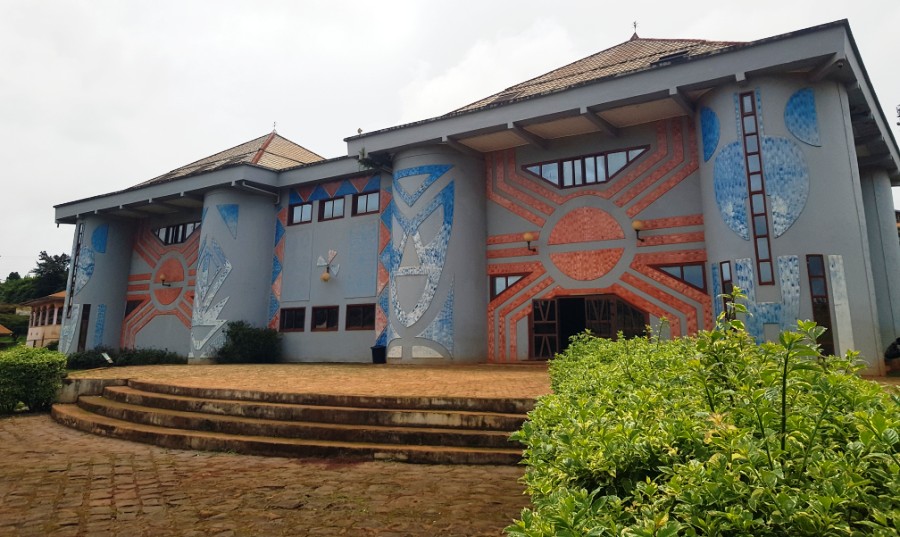
Dschang Museum Showing Tarantula Design
As an Intern, what is the most important lesson(s) you have learned from senior architects, while being a part of a project?
The most vital lesson I drew from seniors is that functionality must precede aesthetics. I have learned to “live” the users’ experience mentally before and while designing. Also, to present design strategies with the confidence required to earn a client’s trust.
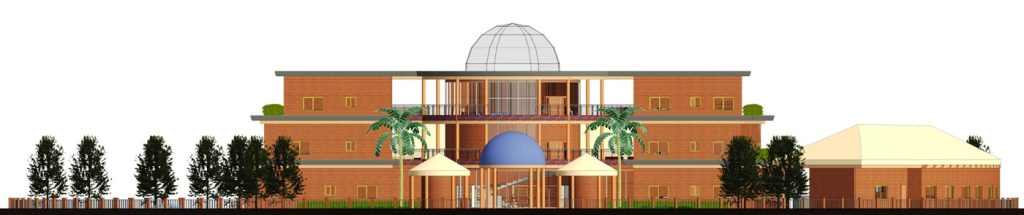
Front Elevation
What are the current prospects and challenges of jobs’ opportunities for fresh young architects and interior designers in Yaoundé, Cameroon?
In Yaoundé, young professionals face mixed prospects. Urban growth creates opportunities in housing, bioclimatic design, and infrastructure renewal. However, many clients still rely on informal builders, limiting demand for professional services.
Fresh graduates also struggle with a gap between academic training and the practical skills required by firms. Higher youth unemployment and strong competition add further pressure. Despite these challenges, designers who promote sustainable, climate responsive solutions and adapt to local market needs can find meaningful opportunities in the city’s expanding built environment.
Project Studies
What role do you perform as a Junior Green Building Consultant at Smart Green Shift Ltd (SHIFT)’s Yaoundé office?
At Smart Green Shift Ltd (SHIFT), I facilitate the EDGE certification process for new and existing projects. My role involves conducting technical assessments of energy, water and material efficiency, advising clients on sustainable material selection, and ensuring that projects meet international green building standards to reduce long-term operational costs and environmental impact.
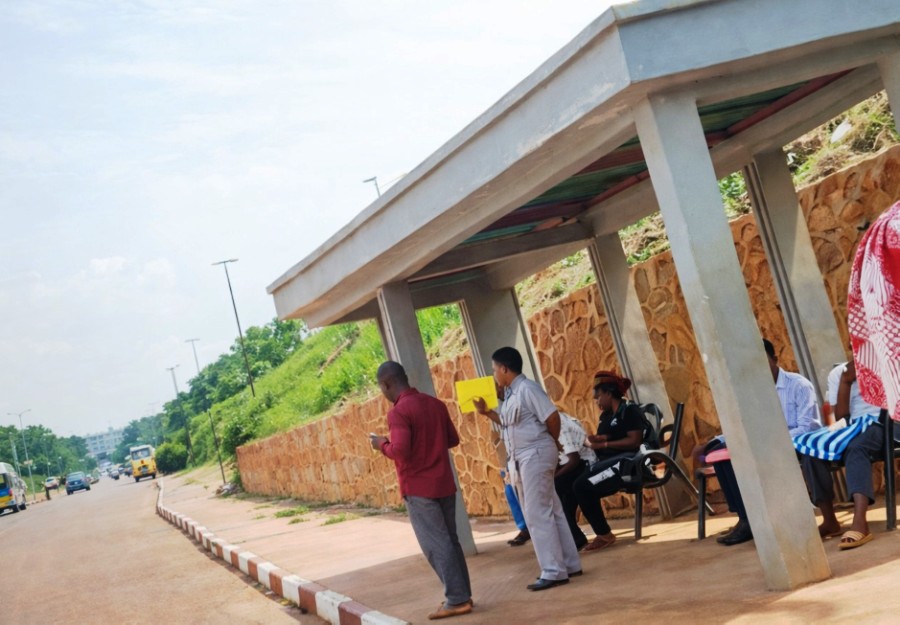
Hostile Architecture – Yaounde Bus Stand Divided Benches
Bus Stand shelters have become iconic symbols of ‘Hostile Architecture’. Elucidate how ‘Bus Stand Shelters’ can be made commuters-friendly to protect them during rain, hailstorm and floods, so that it becomes an iconic symbol of architecture of every city in the world.
Bus stand shelters can shift from being hostile architecture to welcoming public spaces through thoughtful, climate responsive design. Shelters should have wide overhangs, sloped roofs, and impact-resistant materials to protect commuters from rain and hail. Elevated platforms, good drainage, and non-slip surfaces help prevent flooding and ensure safety. Comfortable seating, accessible layouts, and clear signage make the space inclusive rather than exclusionary.
Using durable, sustainable materials, solar lighting, and locally inspired aesthetics can transform shelters into recognizable urban icons. When designed with empathy and resilience, bus stands become symbols of care and identity in cities around the world.
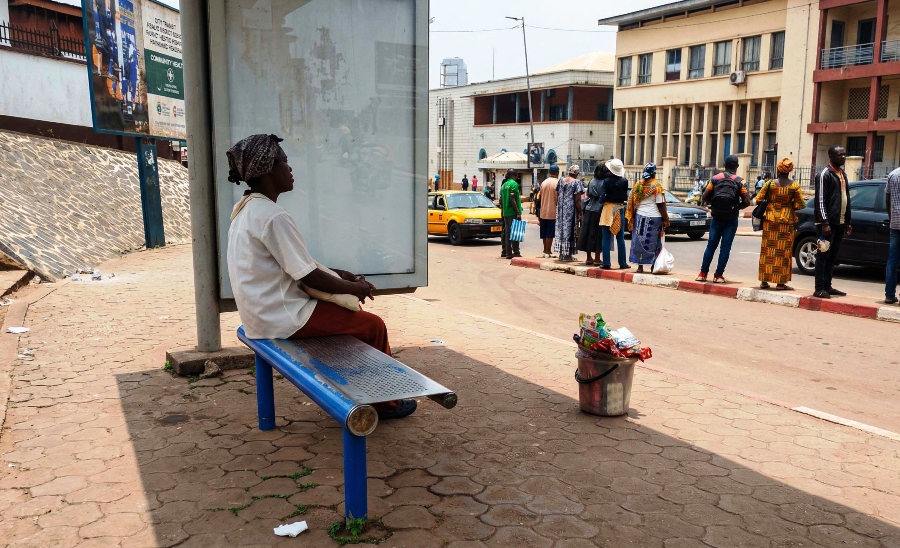
Hostile Architecture – Uncomfortable Slanted Bench
Which significant aspects of the global platform ‘zerobeyond – the new frontier!’ did you like the most, and why?
I admire ‘zerobeyond – the new frontier!’s commitment to highlighting GEN Z voices and its unshrinking critique of “Global Urban Failure”. It provides a rare, high-stakes stage for young architects to challenge the status quo and share localized solutions with a global audience.
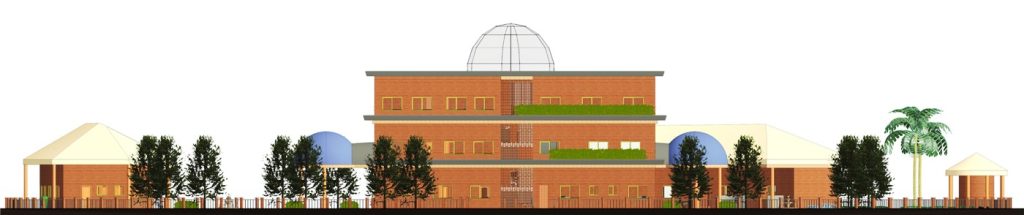
Left Elevation
The “Global Urban Failure” has seen all the major cities being flooded each year repeatedly. Elucidate your perspectives and solutions as an Architect in respect to Yaoundé, Cameroon.
In Yaoundé, the “Global Urban Failure” is characterized less by catastrophic flooding and more by inefficient drainage systems frequently compromised by poor waste management and inadequate climate-adaptation strategies. To address these localized challenges, I advocate for a transition from reactive measures to proactive resilience by designing buildings according to international norms using technical tools such as EDGE – Excellence in Design for Greater Efficiencies and the BRI – Building Resilience Index. EDGE is an IFC-developed green building certification system that quantifies resource efficiency in energy, water and materials.
Complementing this, the BRI is a web-based hazard mapping and self-assessment tool that evaluates a project’s capacity to withstand climate-related risks. As an architect, my perspective involves using the BRI to assess site-specific risks – such as the city’s unique hilly topography – to implement nature-based solutions. By integrating permeable surfaces, protecting natural floodplains, and ensuring resource efficiency through EDGE, we can move beyond the “gray” infrastructure of clogged concrete gutters toward a resilient urban fabric that proactively manages both – runoff and long-term climate risks.
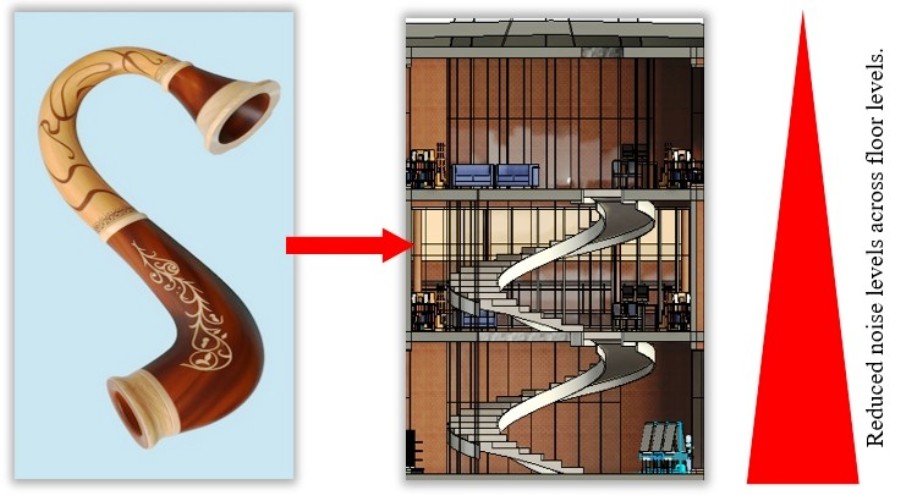
Shofar Inspired Staircase
Looking at the past in the present, what are the futuristic architectural changes you would like to see in your home city / town? Elucidate the reasons for your vision.
In architecture, the past informs the present. I envision a future of preservation and adaptability – a city that neither forgets history nor neglects global challenges but accepts solutions for the benefit of “Mother Earth”. As a young professional who applies EDGE in design, I believe the path to this future lies in academic reform.

Making Parents Proud
I would like to see specialized courses such as DfGE – Design for Greater Efficiencies and BRI, courses by IFC, integrated directly into the university curriculum. By embedding these context-based strategies and international design norms into foundational training, we can prepare the next generation of professionals to adopt best practices early, ensuring an identity built for global excellence.
Image Courtesy: Ndaseh Ngwe Penanje