The Golden Rule for “Career Excellence” no one will teach you
Why do architecture institutions prepare students for juries, but not for survival in the real professional world? The transition from student to architect happens almost instantly — and the competition outside academia is relentless. Success is no longer defined by grades alone; it depends on depth of knowledge, strategic clarity, professional ethics, communication skills, presentation, and the confidence to carry oneself with humility and purpose.
Yet, most young professionals enter this competitive landscape unprepared for its psychological and strategic demands. They possess talent, but lack direction. They have ambition, but no structured roadmap. What is rarely discussed within academic corridors is the “Golden Rule for Career Excellence” — a principle rooted in clarity of vision, disciplined research and unwavering focus. It is not about shortcuts or luck; it is about intentional positioning from the very first year of study. Those who understand this early do not chase opportunities after graduation — they are already prepared for them.
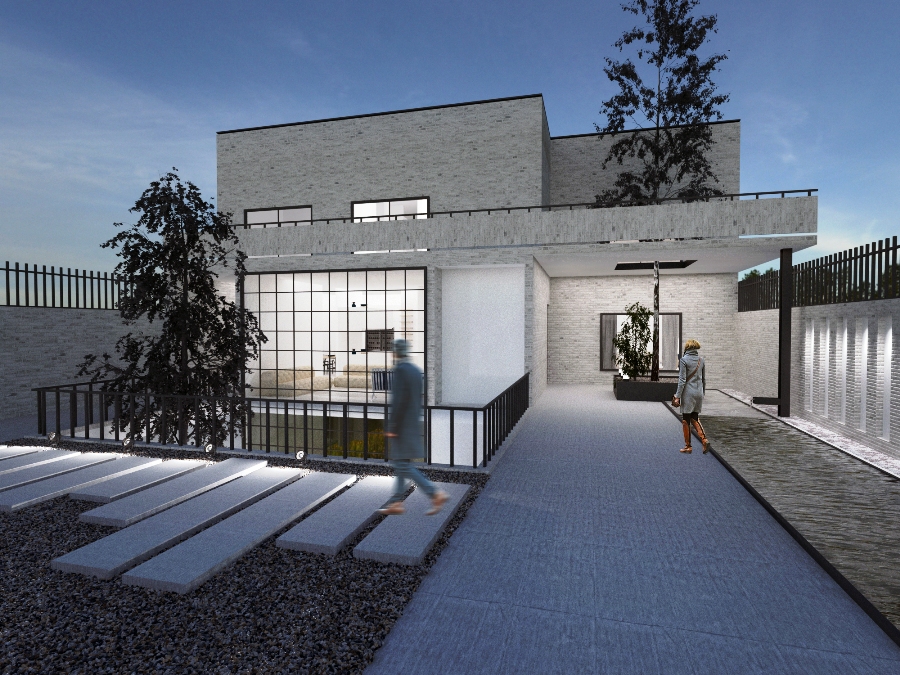
Saba House
‘zerobeyond – the new frontier!’s 9-Step Golden Rule for Career Excellence
First Step: In the first year itself, individuals should list out the “Top 10 Architecture Firms” – they wish to be part of and work after their graduation.
Second Step: Thorough research about each firm’s evolution, Founder(s)’ history and background. Learn everything about their likes and dislikes, their design creations and their signature styles.
Third Step: Next is to learn everything about their “10 Path-breaking Projects” – that made them renowned. Study everything about these projects’ intricacies, specialties and details.
Fourth Step: Keeping in mind all of the above, whenever you design your thesis or projects – big or small – implement all the design elements that you have studied about the 10 firms’ projects.
Fifth Step: Your undergraduate years, irrespective of your busy schedule, are the golden years of reaching to your ultimate goal post-graduation. Without losing your focus from your ultimate goal – Read, Research and Master each nuance of respective firms. The more you study about each firm’s design success – the more confident it will make you.
Sixth Step: In the final year, apply for “Internship” in these firms. Your respectful approach and knowledge about their projects and design ethics will fetch you the spot without much difficulty.
Seventh Step: During your internship, make your strategic move by showcasing your technical skills and knowledge. Be prepared, as you already had, to make yourself seen and heard by your active participation during project discussions and meetings. Be proactive and humble rather than showing off your knowledge – Humility will take you a long way to climb the stairs of success.
Eighth Step: Once your internship is over, send a bouquet of flowers with your ‘thank you note’ to the concerned Head(s) you had worked under. Adding your “Personal Touch” will always keep you in their minds. Everybody loves flowers!
Ninth Step: Once you complete your graduation, pay a personal visit and express your earnest desire to be part of the firm. 99% you will be welcomed with open arms for your respectful professional and personal approach.
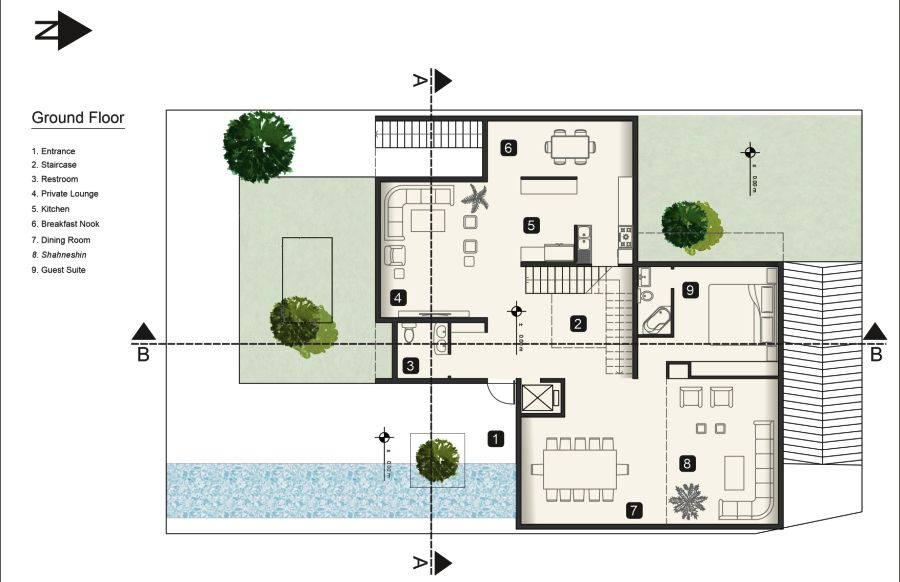
Layout Plan – Ground Floor
The “Golden Rule” is not theoretical advice. It is embodied by the new generation of architects. One such example is Saba Malaz.
Tehran Welcomes GEN Z Series
From Russia, the GEN Z Series travels to Tarbiat Modares University, Tehran in Iran to meet a very kind and passionate Ph. D Candidate Saba Malaz. I hold very high respect for academicians for their commitment to excel to embark on their quest for knowledge. From early years of growing up, Saba Malaz has been deeply drawn to building, composing forms and creating art. She completed her bachelor’s degree from Bu-Ali Sina University in Hamedan in 2020. In 2023, she completed her Master’s from Tarbiat Modares University, Tehran.
Saba Malaz enthuses, “I opened my eyes in Isfahan city that carries the weight of culture, art, history and tourism. My childhood was spent playing with architectural models on one hand and medical instruments on the other (smiles). I knew my father as an urban planner surrounded by countless models, maps and documents, and my mother as a physician and gynecologist. This early exposure to architecture and human health planted a seed in the back of my mind.”
“Today, my academic path focuses on integrating architecture with environmental psychology, neuro-architecture, and the optimization of energy and pollution – an interdisciplinary direction I continue to explore with passion,” Saba Malaz adds with a smile.
Johnny D has a lively interaction with Saba Malaz to explore her academic journey and expertise as a Doctoral Candidate.
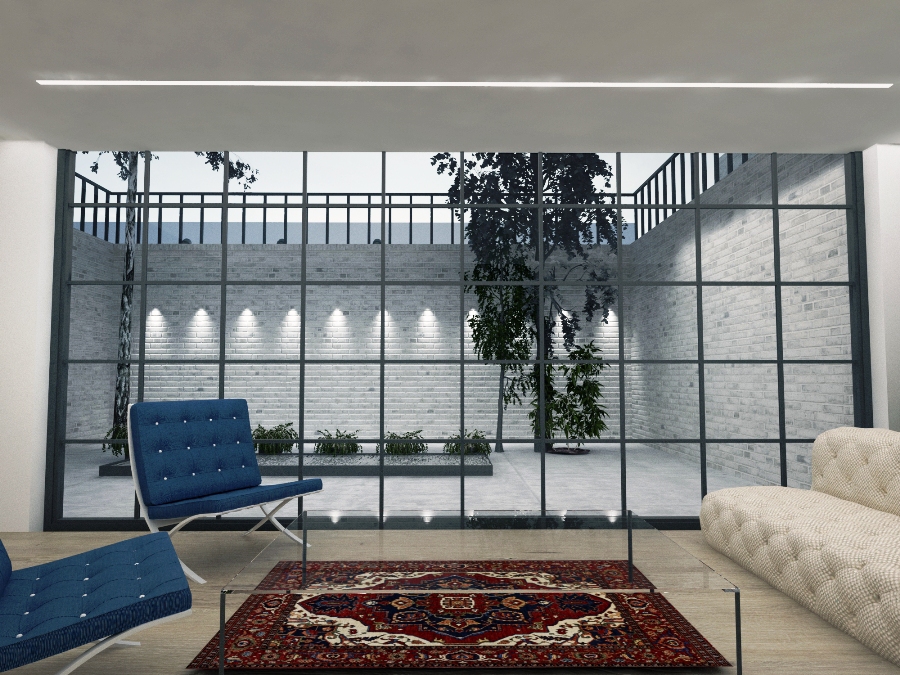
Drawing Room
What was your childhood ambition? Have you always wanted to become an architect?
I had imagined of becoming an architect and a university teacher from my childhood. I was fond of reimagining objects and places, and how they would change lives. During family travels, I would sketch the spaces or write small descriptions of them (smiles).
Over time, photography became another way of observing; I loved capturing buildings and watching how light moved across glass and surfaces throughout the day. These early habits quietly built the foundation for the profession I later chose. Teaching naturally grew from the same curiosity and desire to share what I have learned.
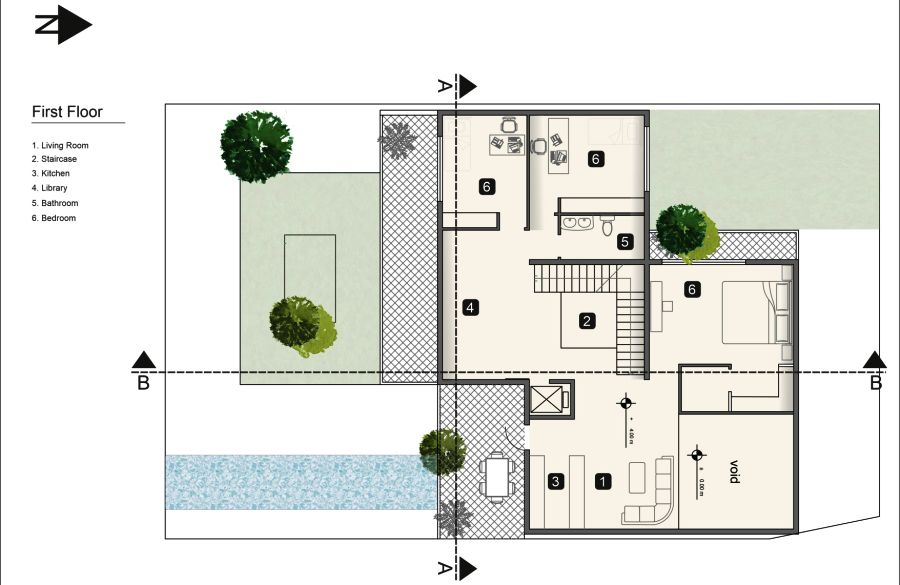
Layout Plan – First Floor
How has architecture influenced your life as a student?
Architecture is multidimensional; it requires thinking like a sociologist, artist, engineer and historian at the same time. As a student, this broadened my view of buildings not only as static objects, but also as living systems shaped by intention and interaction. I learned to ask why a structure endures, which elements influence behavior, and what mental image guided the architect’s early diagrams. Over time, users’ experience became central to my thinking. Architecture is not complete until someone walks through it – does it bring people together, protect privacy or convey the intended atmosphere?
While early semesters focus on lines and representation, later you begin to understand how a building fits within the city and how it shapes daily life. Ultimately, quality of life, inside and outside the home, is deeply tied to architecture.
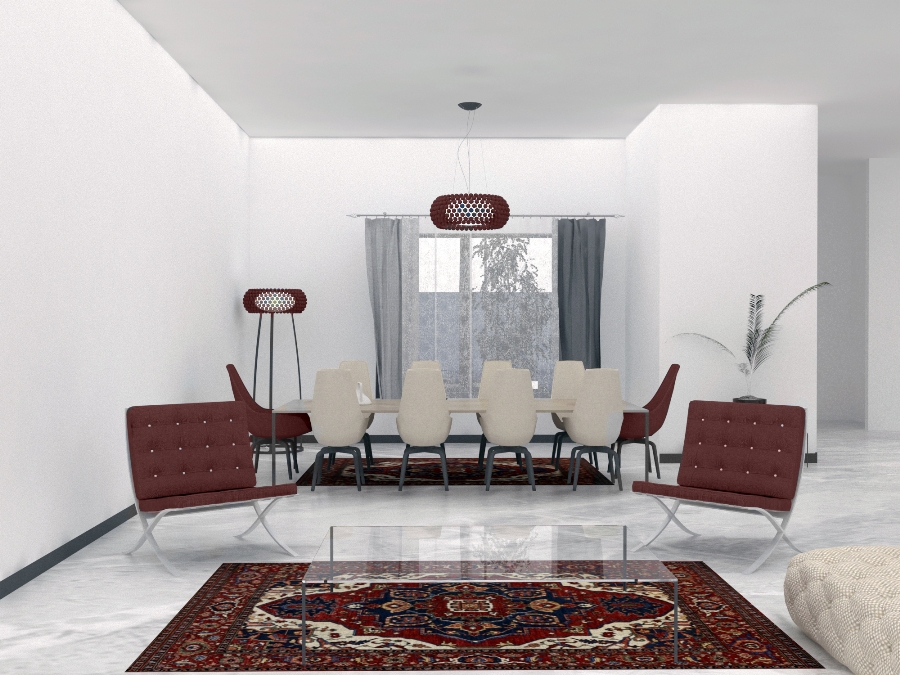
Dining Room
What influenced you to choose ‘architectural engineering’ in your Masters? Briefly tell us about your University and the Master’s Course.
Finishing my bachelor’s degree left me with unfinished questions especially about why certain spaces feel more meaningful than others. My Master’s studies at Tarbiat Modares University coincided with the COVID-19 pandemic, a moment that turned everyone’s attention inward toward the home, and I began questioning which spatial features help people feel grounded, safe or connected during long hours indoors.
At the same time, I became increasingly skeptical that people can fully articulate their emotional responses to space. Growing up with a physician mother made me familiar with discussions about the body, and when I encountered neuroarchitecture, something clicked – could we study how the brain responds to architecture beyond conscious descriptions?
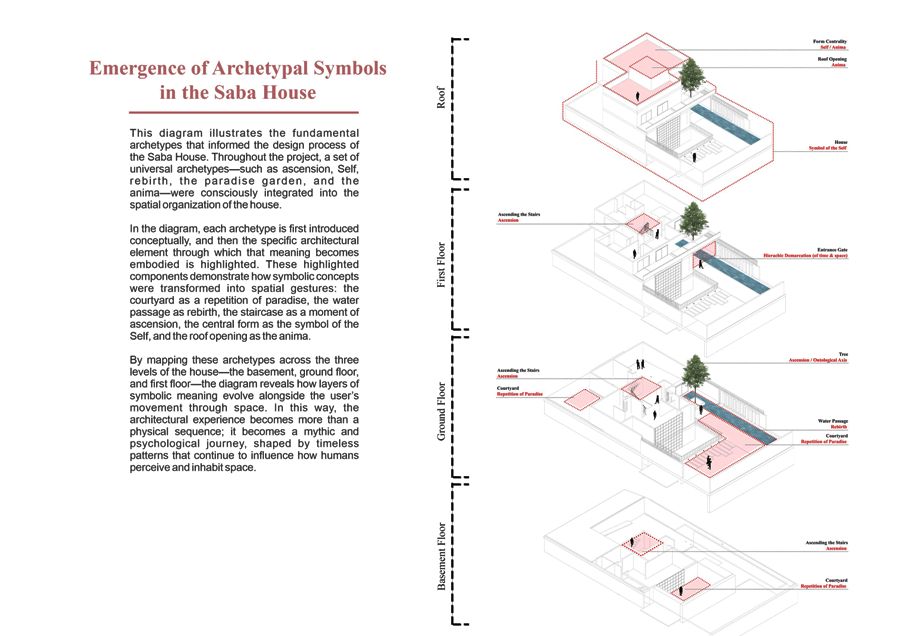
Emergence of Archetypal Symbols
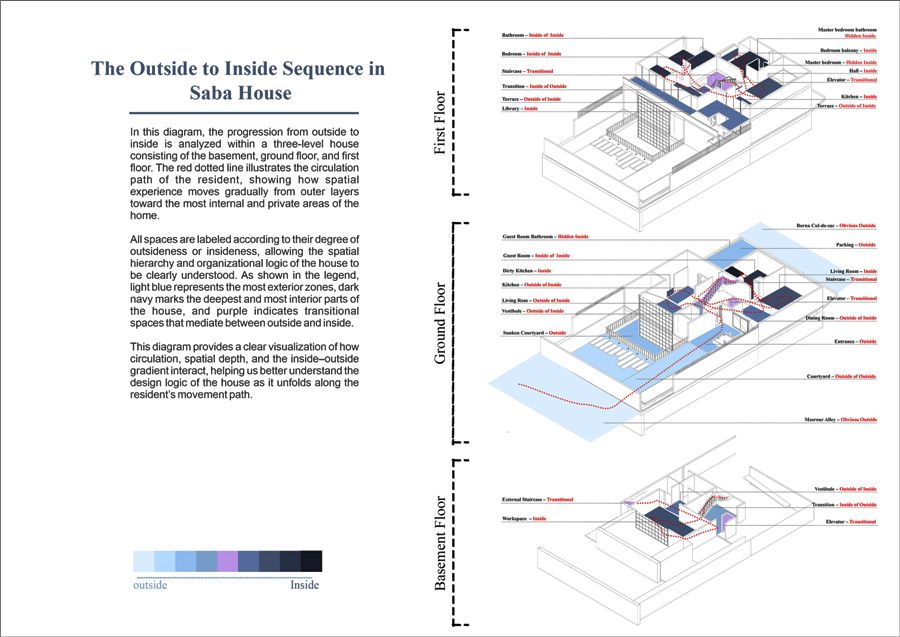
The idea of archetypes universal patterns influencing behavior and perception also fascinated me. I wanted to explore their role in shaping belonging. These questions formed the basis of my thesis ‘A Neuropsychological Analysis of Sense of Belonging to Home Based on Archetypes of the Inside–Outside Dialectic’, in which I studied ten house typologies with different spatial hierarchies to understand which configurations evoke stronger feelings of attachment.
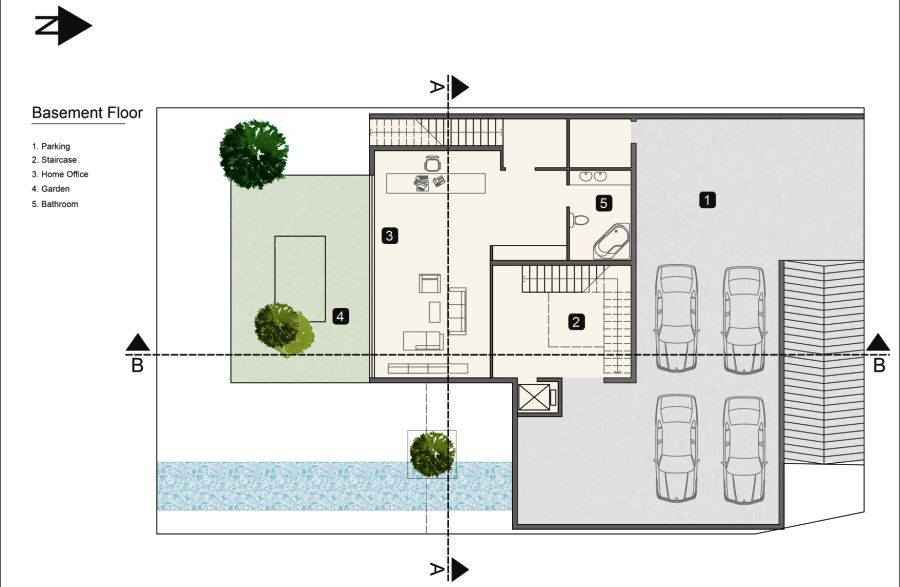
Layout Plan – Basement
You are currently pursuing your Ph. D in Architectural Engineering. Briefly elucidate your Doctoral Thesis and state the reasons behind it.
My doctoral dissertation is titled: ‘Integrated Urban Morphology and Building Form Design Based on Artificial Intelligence: Energy and Pollution Optimization in Residential Blocks of Tehran’.
While my master’s research focused on the home, I increasingly felt that the spaces between buildings – courtyards, shared open areas and pedestrian pockets were equally essential to community life, especially given Tehran’s severe environmental challenges – the city was the most polluted in the world twice last week, and energy consumption remains a national concern.
My research uses AI and simulation to explore how reconfiguring building forms can reduce air pollution, improve outdoor thermal comfort, and lower energy consumption, ultimately creating healthier and more resilient residential environments.
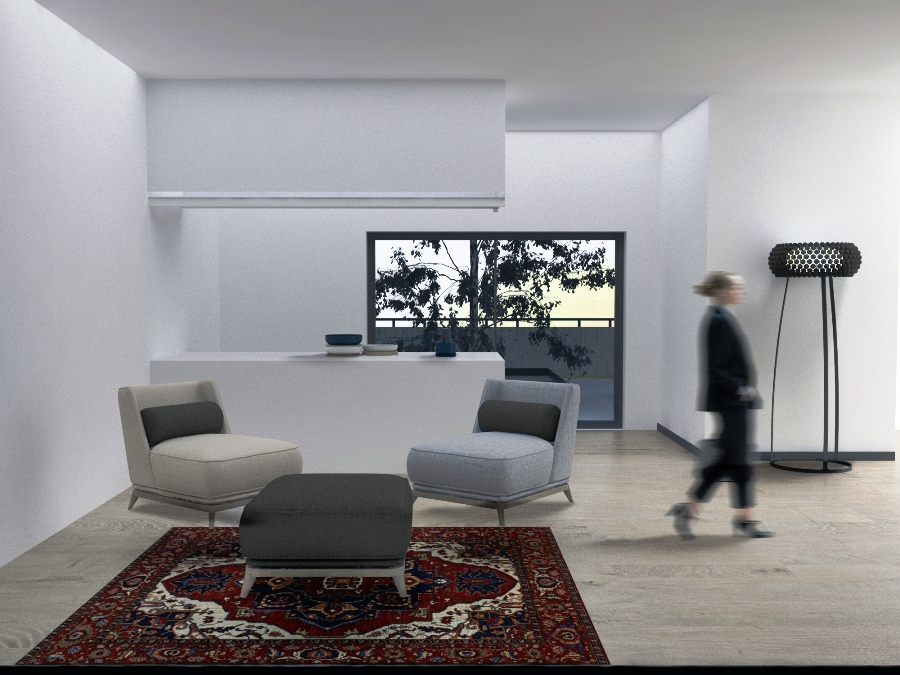
Minimalist Interiors
Briefly describe the significance of your project with the ‘Title of the Project and Site Location’.
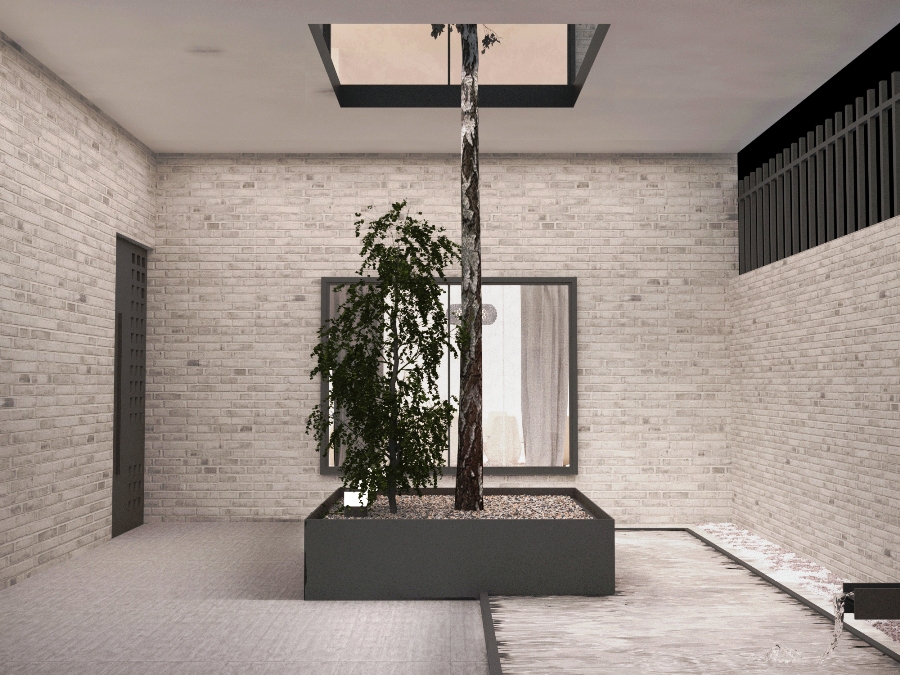
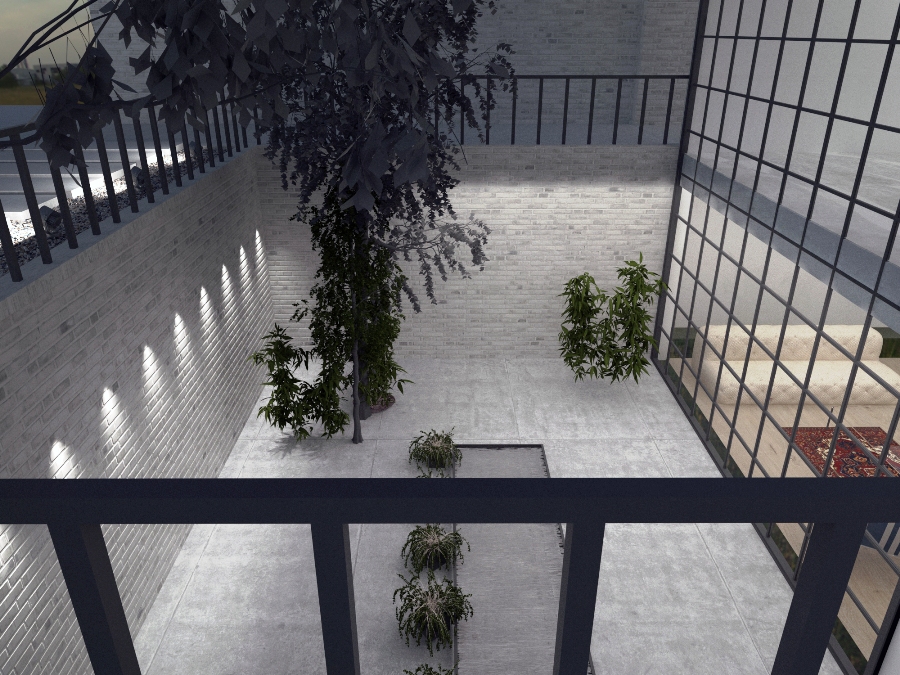
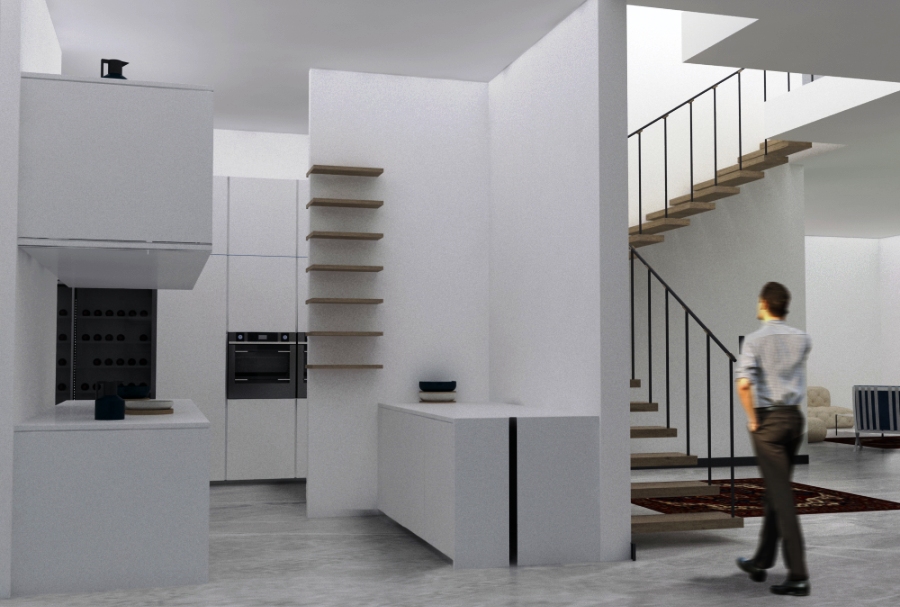
One of the most meaningful projects I have designed is ‘Saba House’, developed directly from my Master’s research. The project explores how archetypal patterns such as the presence of water, spatial continuity from outside to inside, and a centered organizational structurecan enhance comfort and belonging in contemporary homes.
The site is located in Isfahan beside a historic Madi, a water channel from the Safavid era engineered by Sheikh Bahā’ī. Proximity to Abbasabad Street added another layer of cultural context.
Blending Nature
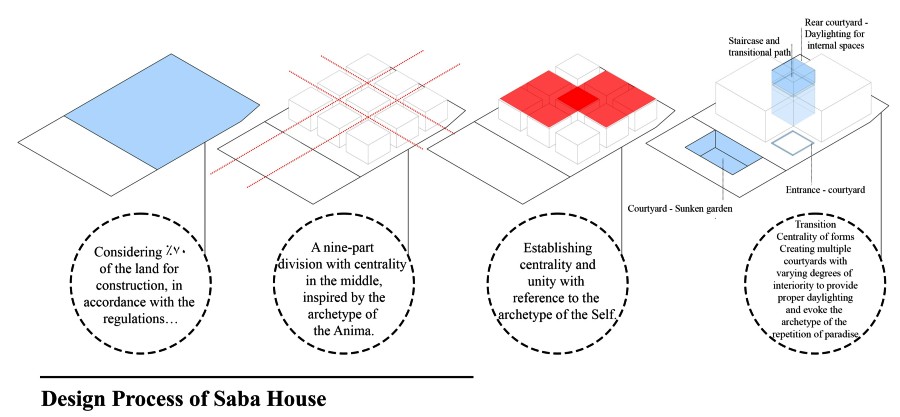
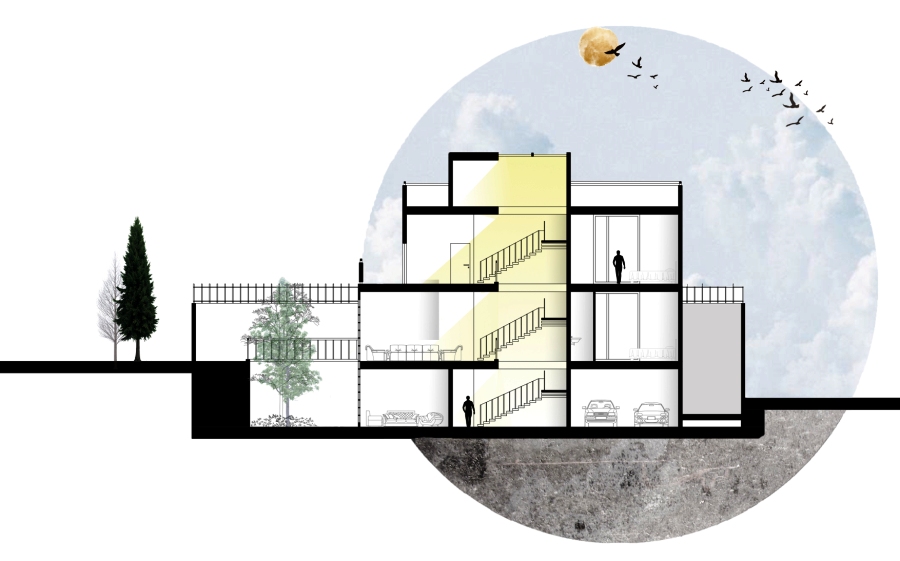
Inspired by traditional Iranian spatial structures, the organizational foundation follows a nine-part pattern, revolving around the ‘Self’ archetype as its nucleus. Each segment took on a specific architectural role: an entrance threshold that prepares the visitor, a vertical circulation core, a courtyard that anchors the home, and a sequence of living spaces arranged across three floors.
Rather than being symbolic for its own sake, this nine-part system created a hierarchy that feels intuitive and grounded connecting cultural memory with contemporary living needs. The project became a personal exploration of how traditional logic can be translated into new forms without losing its emotional and psychological resonance.
Design Process
Which National or International architect has inspired / influenced you? Please specify as to why?
Louis Kahn has been the most influential architect for me. Studying the Kimbell Art Museum during my undergraduate years fundamentally changed how I understood architecture. His clarity, devotion to light, and pursuit of the “essence” of each space resonate deeply with me, making his work feel both monumental and intimately human.
Spacious Outlook
As an Intern, what is the most important lesson(s) you have learned from senior architects, while being a part of a project?
Working with senior architects taught me the importance of understanding context before making any design decision. In one project, when our team rushed into form-making, a senior architect reminded us: “Solve the life of the project before drawing its shape”. Since then, I begin every project by mapping users’ needs, constraints, and cultural patterns, knowing that early organization prevents confusion and allows creativity to unfold with purpose.
Outside to Inside Space Sequence
What are the current prospects and challenges of jobs’ opportunities for fresh young architects in Tehran, Iran?
The construction recession in Iran, especially in Tehran, has reduced available opportunities for young architects. Yet, the new generation enters the field with strong digital skills and a willingness to rethink Iranian architectural identity. Their work increasingly appears in international competitions, showing that despite economic challenges, creativity continues to thrive.
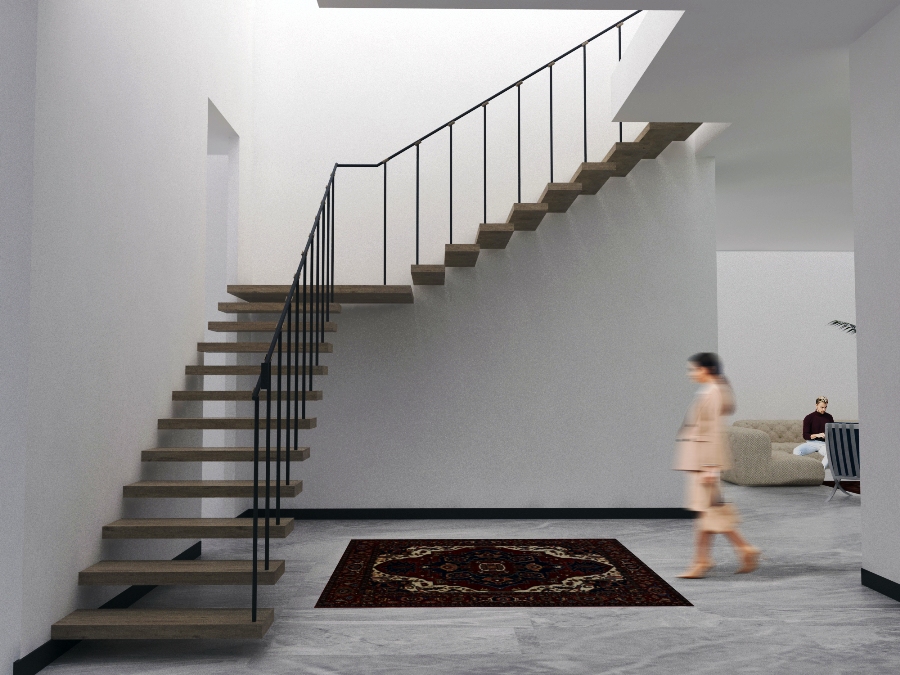
Spacious Stairwell
You are currently researching about ‘Digital Architecture and Artificial Intelligence’. As a Researcher, how do you see the future of these two fields impacting architecture at large?
As environmental crises intensify worldwide, digital architecture becomes increasingly vital. Simulation tools help predict energy performance, microclimates, and users’ experience before construction, while AI reveals hidden patterns and offers optimized, sustainable solutions. Together, they guide architecture toward more informed, scientific and human-centered decision-making.
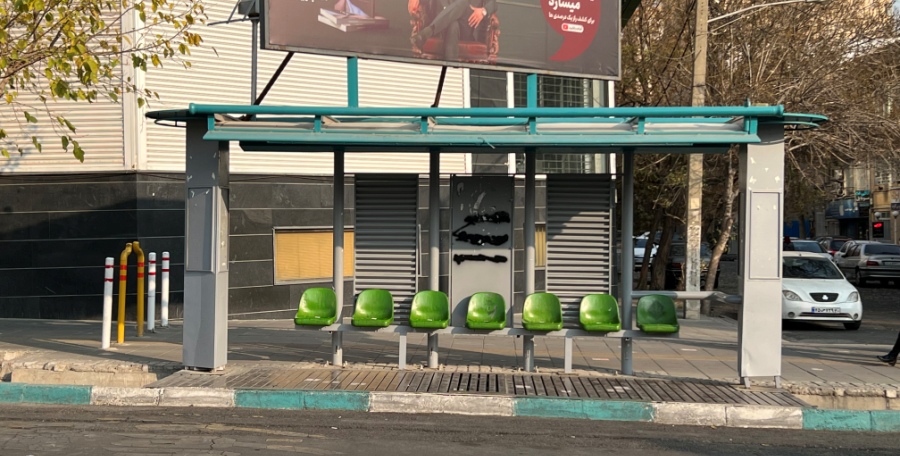
Hostile Architecture – Bus Stand Shelter – Tehran, Southern Janat Abad Street
Bus Stand shelters have become iconic symbols of ‘Hostile Architecture’. Elucidate how ‘Bus Stand Shelters’ can be made commuters-friendly to protect them during rain, hailstorm and floods, so that it becomes an iconic symbol of architecture of every city in the world.
The transformation of bus stops into human-friendly spaces begins with raising public awareness about hostile architecture and the need to improve such environments. Choosing appropriate materials is essential: high–thermal-capacity surfaces support seasonal comfort, while smooth finishes enhance user experience.
Transparent enclosures increase safety through natural visibility, and shelters must fully protect commuters from rain, snow, sun, and wind with climate-responsive design. Finally, integrating patterns and archetypes rooted in Iranian cultural identity can elevate bus stops from purely functional elements to pleasant, meaningful, and memorable urban landmarks.
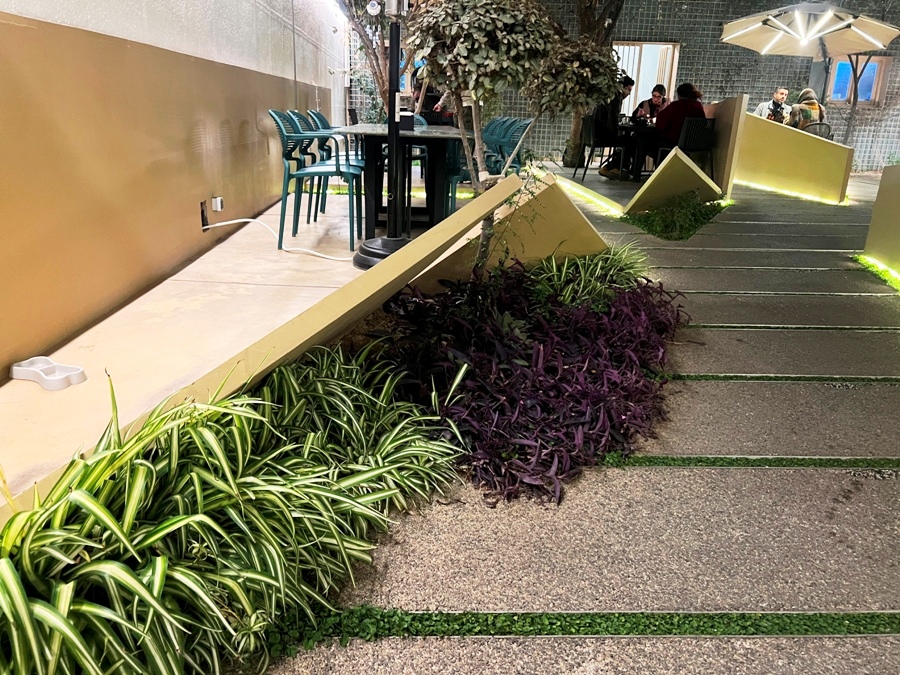
Inward-tilted Planter as Hostile Architecture – Tehran, Nejatollahi Street
Which significant aspects of the global platform ‘zerobeyond – the new frontier!’ did you like the most, and why?
‘zerobeyond – the new frontier!’ brings together architects from around the world and allows them to share not only their projects, but also their stories, motivations and cultural experiences behind them. I appreciate that it provides a space, where personal narratives and architectural thinking meet.
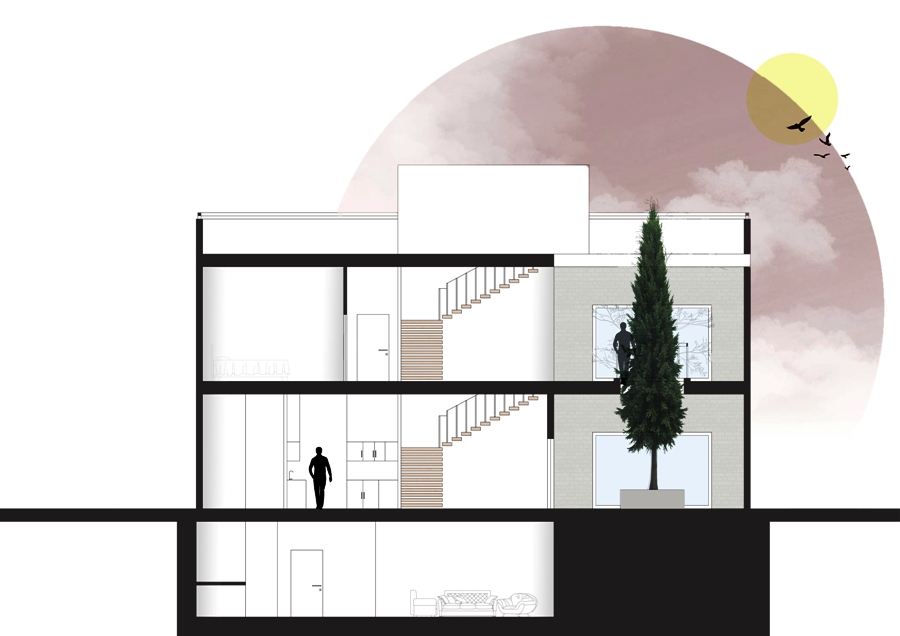
Section A-A’
The “Global Urban Failure” has seen all the major cities being flooded each year repeatedly. Elucidate your perspectives and solutions as an Architect.
This issue goes beyond flooding and reveals deeper urban dysfunction and unequal access to spatial resources. Architects must prioritize resource efficiency, environmentally responsible development, and the protection of natural and cultural assets.
Effective solutions should be holistic—from restoring natural landscapes and adding permeable surfaces to adopting water-sensitive and resilient spatial design—to support sustainable and equitable urban growth.
Sleek Interiors
Looking at the past in the present, what are the futuristic architectural changes you would like to see in your home city / town? Elucidate the reasons for your vision.
Isfahan reached the height of its architectural identity during the Safavid era, yet the contemporary city has lost much of that coherence. I imagine a future where the city revives its microclimates and restores the historic Madi network along with the Zayandeh-Rud as its ecological and cultural lifeline transforming both into social, environmental and tourism infrastructure.
Section B-B’
At the same time, contemporary projects should reinterpret Iranian archetypes by translating their spatial intelligence into meaningful new forms, reconnecting historic wisdom with today’s challenges and guiding Isfahan toward a more resilient and culturally grounded future.
Image Courtesy: Saba Malaz